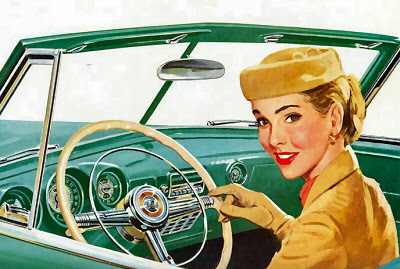
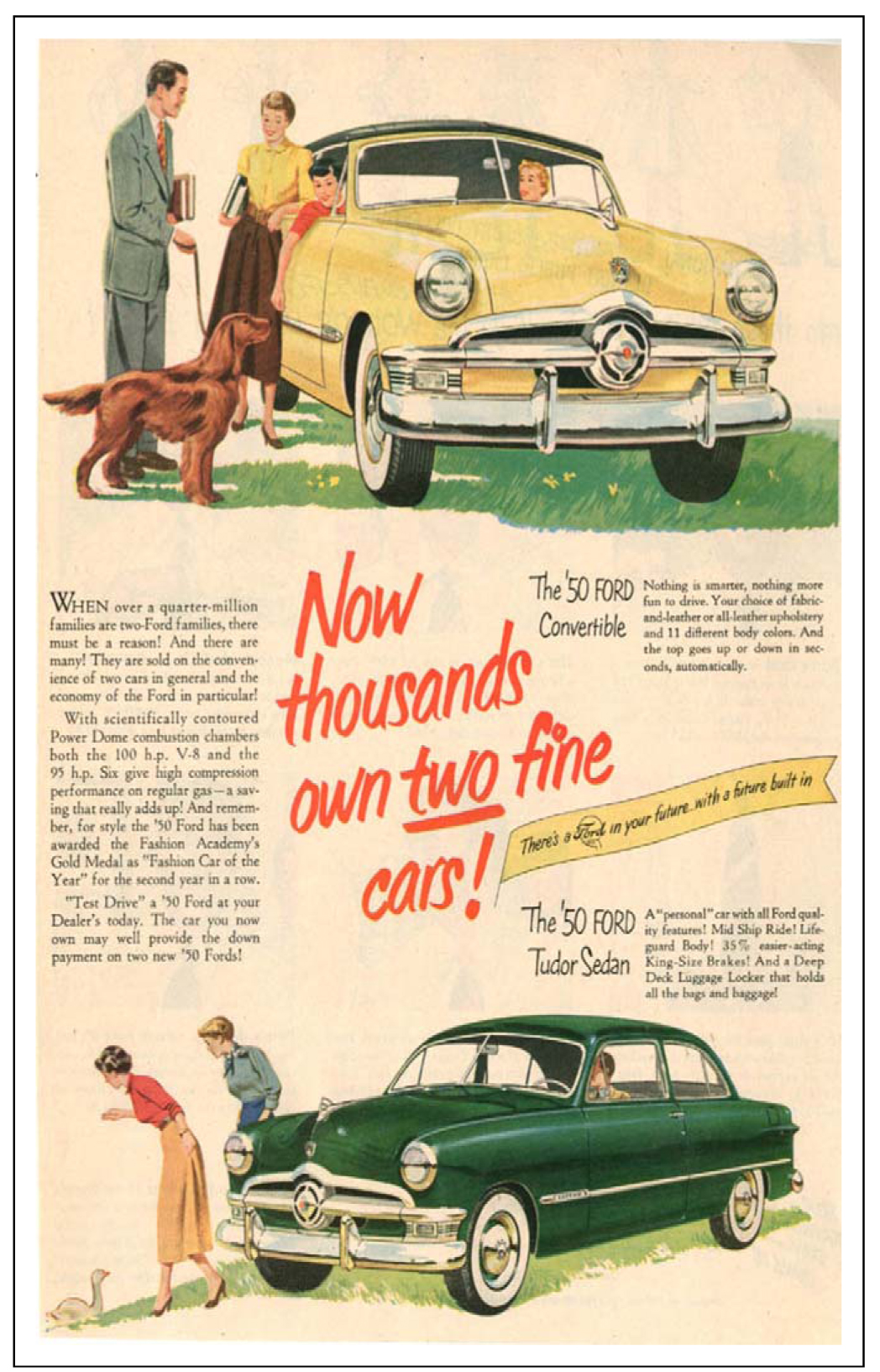
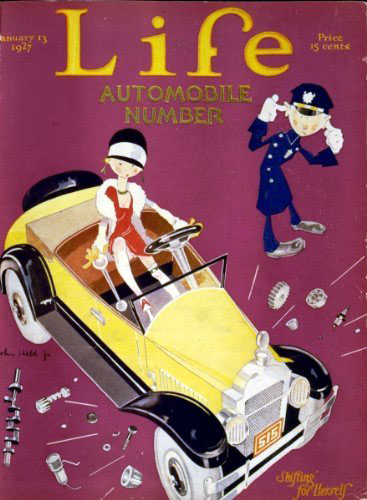
Car Stereotypes & the Woman Driver

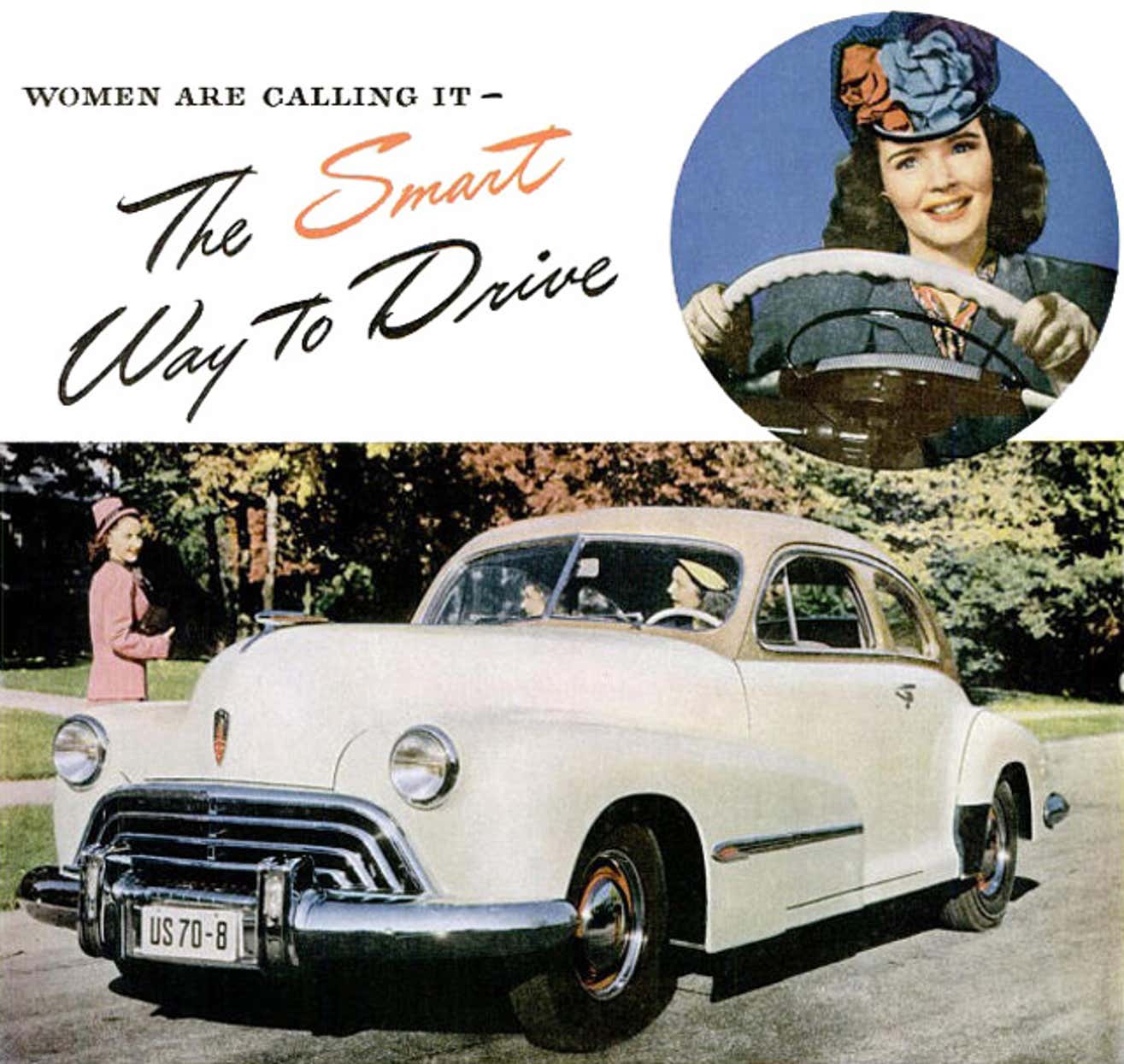
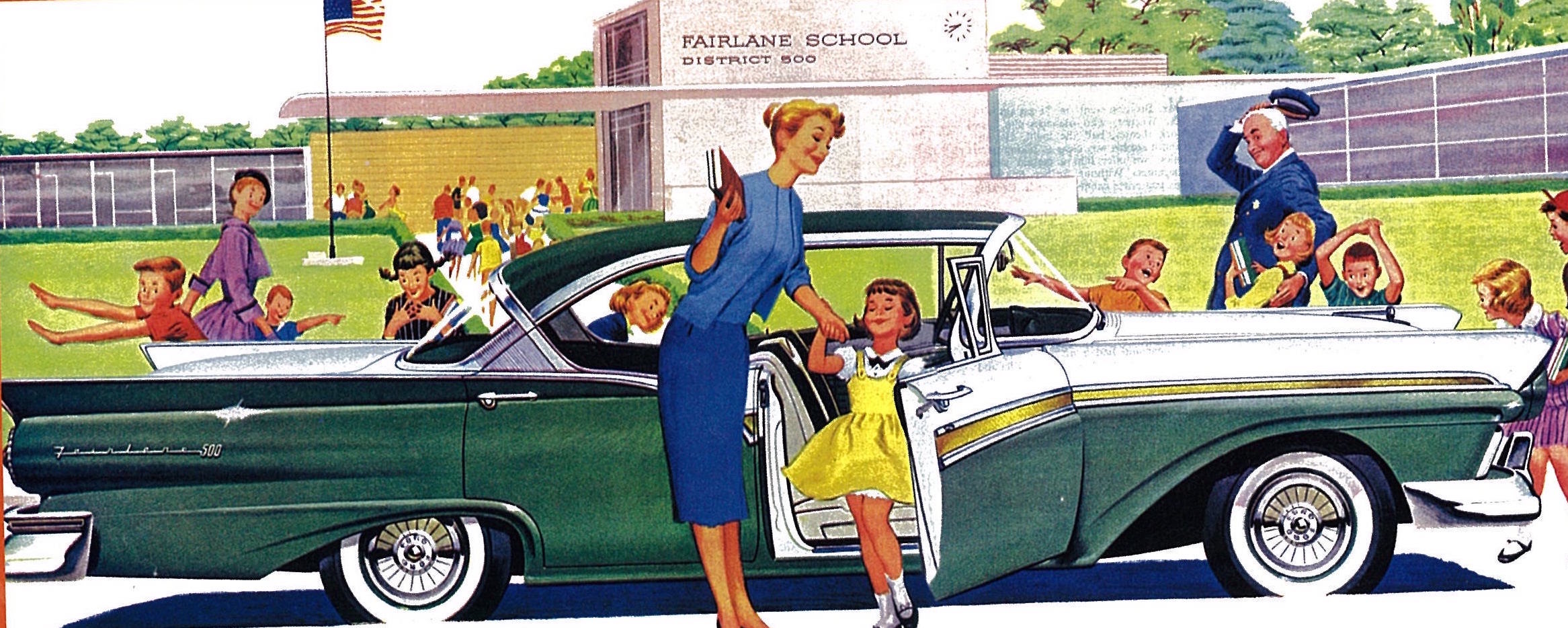
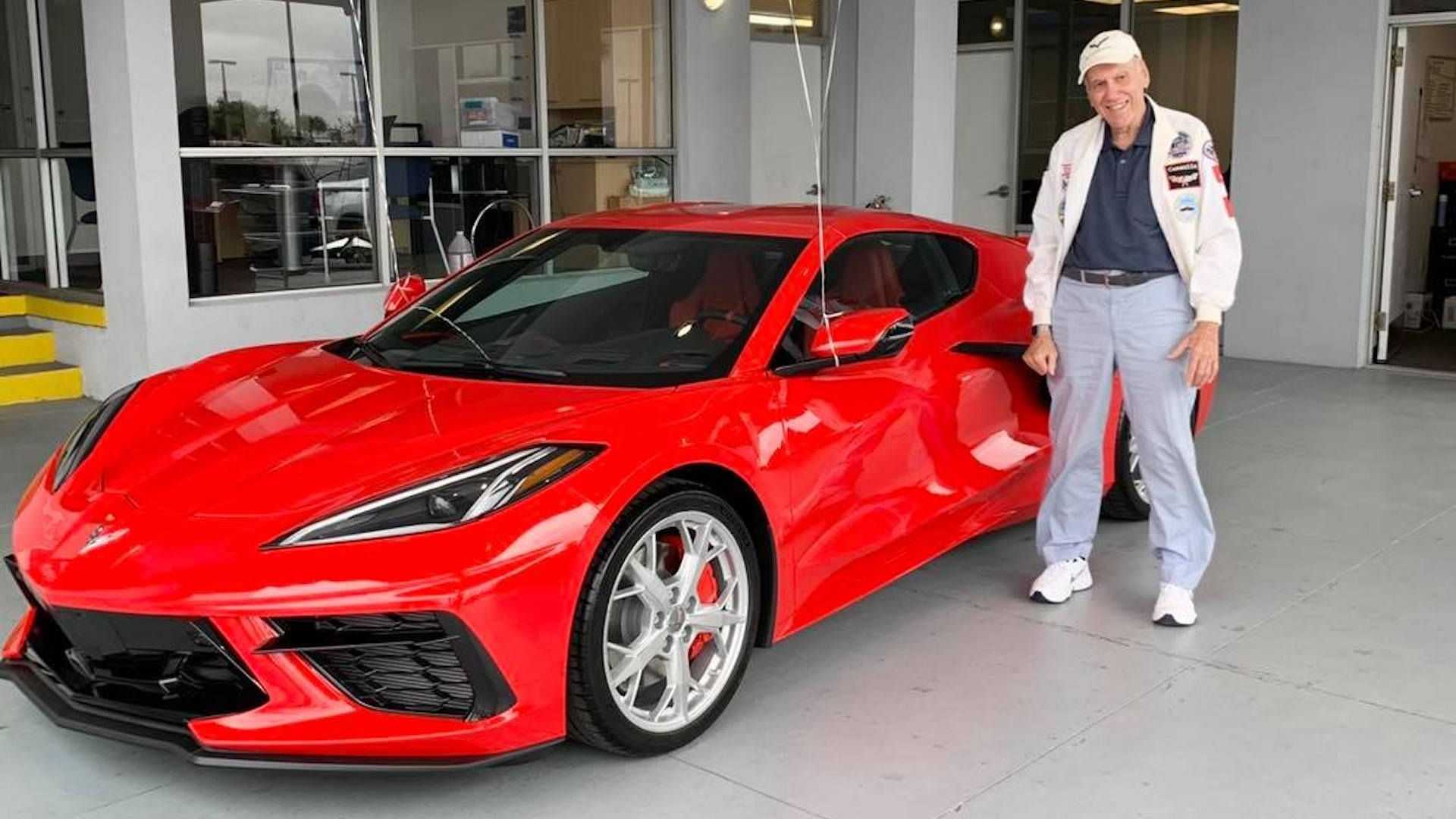
A popular and sometimes irreverent automotive website, Jalopnik not only produces timely car-related articles, but it often gets readers involved by asking for input on various autocentric topics. One of the subjects covered recently was that of car stereotypes. After the author presented a few of his own, the article was followed up by responses from Jalopnik readers. The collected list of stereotypes ranged from the odd and obscure to the well-worn.  Among those offered: Miatas are favored by gays; Subarus are driven by lesbians; pickups are the choice of rednecks; muscle cars are owned by macho men; Corvettes are the pick of old guys; Buicks are the car of choice of anyone over 80. What is interesting about these common and oft cited stereotypes is how intricately they are intertwined with gender. Gender, sometimes combined with sexual orientation or age, is not only the major identifier of the car owner, but is the primary means by which a vehicle is disparaged or valued.
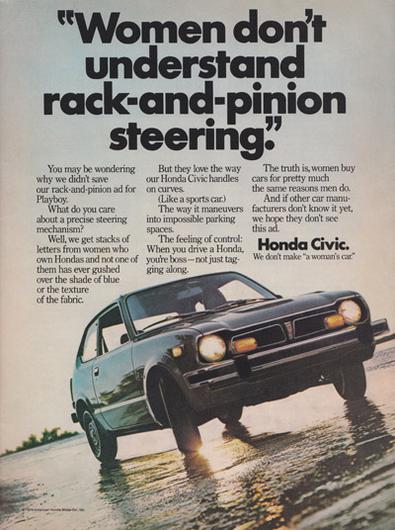
This should not be surprising. Gender in car culture is often called upon to ascribe value and authenticity or to degrade and diminish a particular automobile. Due to the automobile’s longstanding association with masculinity, vehicles strongly associated with the youngish straight [white] male driver are invariably considered more powerful, better engineered, technologically superior, more responsive, and of greater workmanship and quality than those chosen by women or members of the LBGTQ community. Much of this assumption is based on the common perception that women just don’t know much about cars. As historian Judy Wajcman notes, “the absence of technical confidence or competence does indeed become part of feminine gender identity, as well as being a sexual stereotype” (155). The belief that women lack technical expertise often creates a reverse kind of logic in the minds of many male consumers. They believe that since women cannot appreciate the finer technical characteristics of a car, such as power, handling, and performance, the cars women purchase must be deficient. Women’s approval, in the minds of many men, leads to the devaluation of the car. 

This assumption of automotive inferiority carries over to cars popular in the gay community. In Masculinities, RW Connell remarks that the common perception of gay men is that they “lack masculinity”. As Connell writes, “from the point of view of hegemonic masculinity, gayness is easily assimilated to femininity” (78). Because gay men are often considered feminine among the straight-white-male population, the automobiles they drive are marked “girly’” as well. Consequently, vehicles marked as feminine or “gay” are thought of as less, affecting automotive sales and discouraging those buyers who wouldn’t be caught dead driving a “feminine” car.
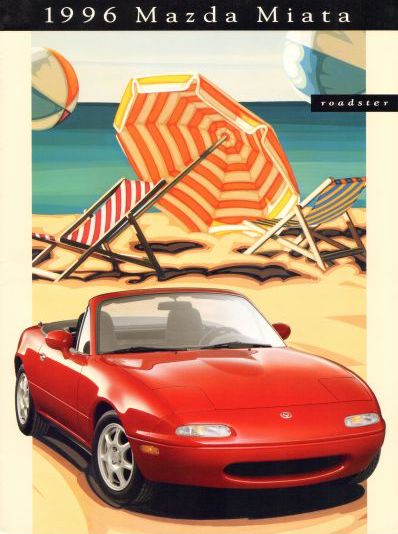
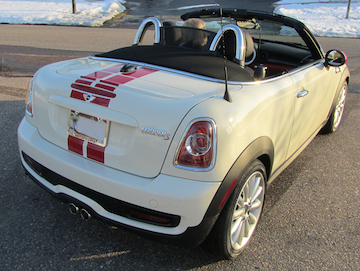
What is interesting is that the cars subject to disparaging gender stereotypes were not, for the most part, originally produced or marketed to non-straight-white-male customers. As an example, vehicles now labeled “chick cars” are fast, sporty, nimble vehicles originally produced for the male automotive enthusiast. However, once women with car savvy and newly acquired spending power appropriated the Miata, VW New Beetle, and Mini Cooper as their own, many members of the male population became hesitant to drive them. Some men consider the “chick car” an affront to their masculinity and fear what driving such a car will say about them. As auto writer Ted Laturnus suggests, “for a lot of male drivers, the thought of driving a ‘chick car’ is the kiss of death when it comes to signing on the dotted line.”

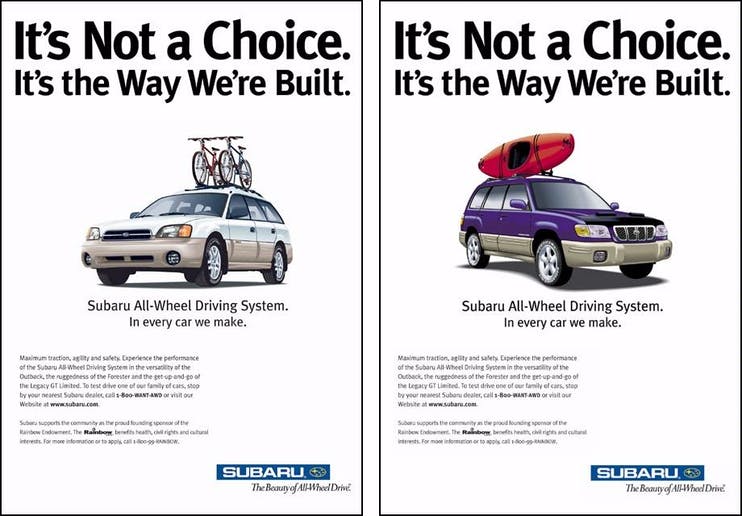
The same could be said for the Subaru. As noted on its website, “Subaru has a long history of offering vehicles that are both highly capable and intelligently designed.” Originally known for its 4WD station wagon, the introduction of the Outback SUV – the first of its kind in the automotive industry – led to Subaru’s reputation as a manufacturer of safe and practical vehicles with exceptional performance features. While originally marketed as a vehicle for outdoorsy adventurous guys as well as active families, the Subaru is now considered a top choice for those who identify as lesbian. Yet unlike the chick car scenario, in which automakers beefed up the Beetles and Mini Coopers to make them more appealing to men, Subaru actively and aggressively pursued the lesbian market. As Alex Mayyasi reflects, ‘the marketers found that lesbian Subaru owners liked that the cars were good for outdoor trips, and that they were good for hauling stuff without being as large as a truck or SUV. (In a line some women may not like as much, marketers also said Subaru’s dependability was a good fit for lesbians since they didn’t have a man who could fix car problems.)” Yet unlike chick car manufacturers who feared an association with the woman driver would affect automotive sales, Subaru was confident enough in its product to aggressively pursue the lesbian market. Although the Subaru remains a popular choice among teachers and educators, health care professionals, IT professionals, and outdoorsy types of all genders and sexual orientations, its appeal to the non-straight-white-male population has led to its label as the “lesbian” car.
The age group of a certain automotive purchaser also contributes to a negative stereotype. Older drivers are considered overly cautious, accident prone, and focused on amenities that contribute to a vehicle’s safety, comfort, and economy rather than handling, power and performance. Consequently, car models favored by senior citizens are considered less desirable  than those marketed to young white men. Despite its current advertising campaign, Buick’s long association with mature drivers has stubbornly labeled it as the old person’s car.

In much of my research, I focus on women who drive vehicles that challenge gender stereotypes by choosing vehicles – muscle cars, chick cars, and pickup trucks – associated with men. These women often face disparaging remarks and unsubstantiated assumptions regarding their vehicle choices. Although the most prevalent car stereotypes are those associated with femininity, women who choose ‘masculine’ vehicles are not immune.

While car stereotypes are not universally focused on gender, the fact that so many rely on the notion that vehicles associated with individuals who are not young, white, straight, and male are worthy of ridicule is telling. While the intention of the Jalopnik article no doubt was to engage and entertain its readers, it also reminds us that at least in the car world, as Virginia Scharff writes, “what is seen as feminine, or belonging to women, seems trivial at best, dangerous at worst” (167).

Bellwood, Owen. “What Car Comes with the Weirdest Stereotypes?” Jalopnik.com 16 Nov 2021.

Connell, R.W. Masculinities. Berkeley: University of California Press, 2005.

“The History of Subaru.” grandsubaru.com

Laturnus, Ted. “So What’s Not to Like About a So-Called Chick Car?” Globe and Mail. 19 Jan. 2006.

Mayyasi, Alex. “How an Ad Campaign Made Lesbians Fall in Love with Subaru.” lesbianbusinesscommunity.com n.d.

Scharff, Virginia. Taking the Wheel: Women and the Coming of the Motor Age. Albuquerque: U of New Mexico P, 1991.

Wajcman, Judy. Feminism Confronts Technology. University Park: Pennsylvania State UP, 1996.

The Stick Shift & Masculinity

Since the combustion engine made its debut in the early twentieth century, the automobile has been associated with masculinity and the male driver. Throughout its colorful history, the automobile has been embodied with masculine qualities. Early autos were often described as dirty, smelly, and noisy; modern cars are often referred to as tough, fast, and powerful. In addition, within American car culture there is an underlying conviction that successful operation of a gasoline powered is dependent on particular masculine behaviors. Steady nerves, aggression, and rationality were claimed as masculine by the first generations of male drivers; today’s men behind the wheel have added automotive knowledge, technological savvy, and superior driving skill to the mix. 

One of the skills that has traditionally been associated with superior driving ability – and masculinity – is familiarity with a manual transmission. The gendering of transmission use was instituted shortly after the introduction of the automatic transmission in the 1950s. Although women had competently operated manual cars for decades, manufacturers viewed marketing automatics to women as a means to broaden their consumer base. As Jalopnik writer Raphael Orlove notes, ‘what Detroit figured out was that it could sell a lot more automatics if it touted how their ease of use made them more female friendly.’ All of a sudden, stick shifts were deemed too difficult to use for the woman behind the wheel. The notion that the manual transmission was unsuitable and unworkable for women promoted by auto advertisers and the automotive press solidified its position as a symbol of male driving expertise.

As noted in a recent Jalopnik article, the ‘real men use three pedals’ mentality remains alive and well. As the author notes, men often blame their wives for the purchase of an automatic transmission; to admit it is their choice would somehow compromise their masculinity. In my research into women who venture into automotive cultures traditionally dominated by men – i.e. muscle cars, motorsports, and chick cars – the ability to drive a stick was cited by many women as evidence of  exceptional driving skill. In the minds of many female auto aficionados, mastery of a manual transmission puts them on equal footing – no pun intended – with men. 

Despite the engrained association between manual transmissions and masculinity, less than 3% of cars sold today have stick shifts. While it is believed that over half the US driving population – men and women – know how to drive a manual, no one is buying them. Boomers certainly make up a good portion of the know-how-to-drive-a-stick group as they most likely learned to drive in a manual. But to this aging group, ease of driving has become more important than demonstrating machismo by shifting gears. So why does this association persist? Why does the infinitesimal population of manual car buyers dictate the gendered implications of transmission choice? Entrenched gender divisions and expectations – especially in a culture that has relied on them since its inception – are difficult to eradicate or dismiss. I suspect that the aging out of the boomer generation, accompanied by the influence of Millennials with less interest in cars and gender differentiation – will change how we think about cars. And the rise of electric vehicles will hopefully, in time, make such evaluations meaningless.

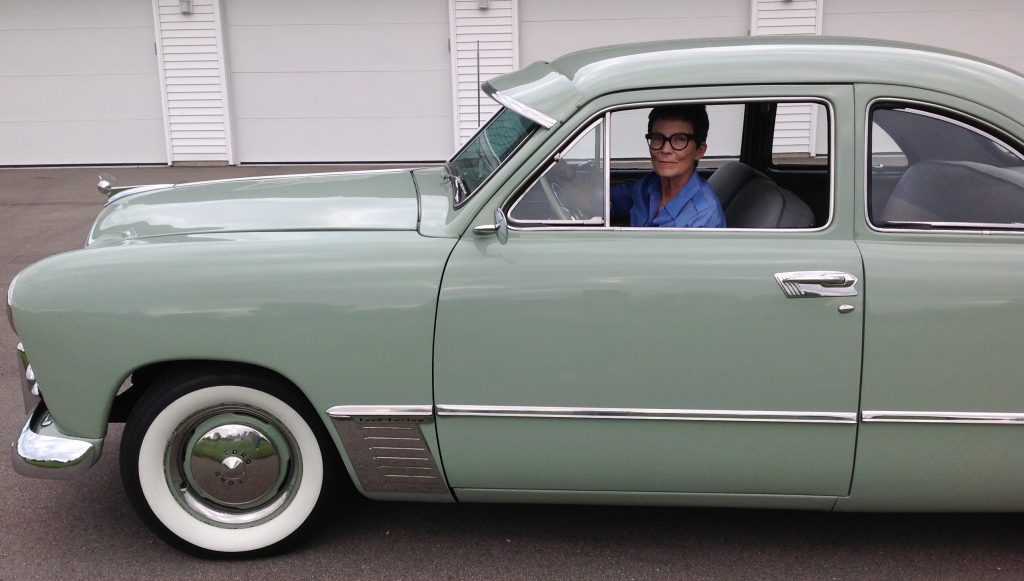
In the meantime, as long as this obstinate association persists, this female boomer will enjoy surprising the male contingent at car shows when driving up in her three-on-the-tree 49 Ford or four-on-the-floor 67 Shelby Mustang.

Evening at the Automotive Hall of Fame

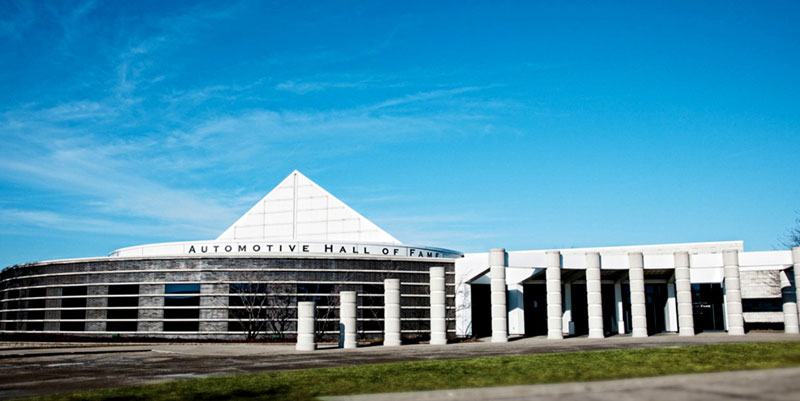
Automotive Hall of Fame – Dearborn Michigan

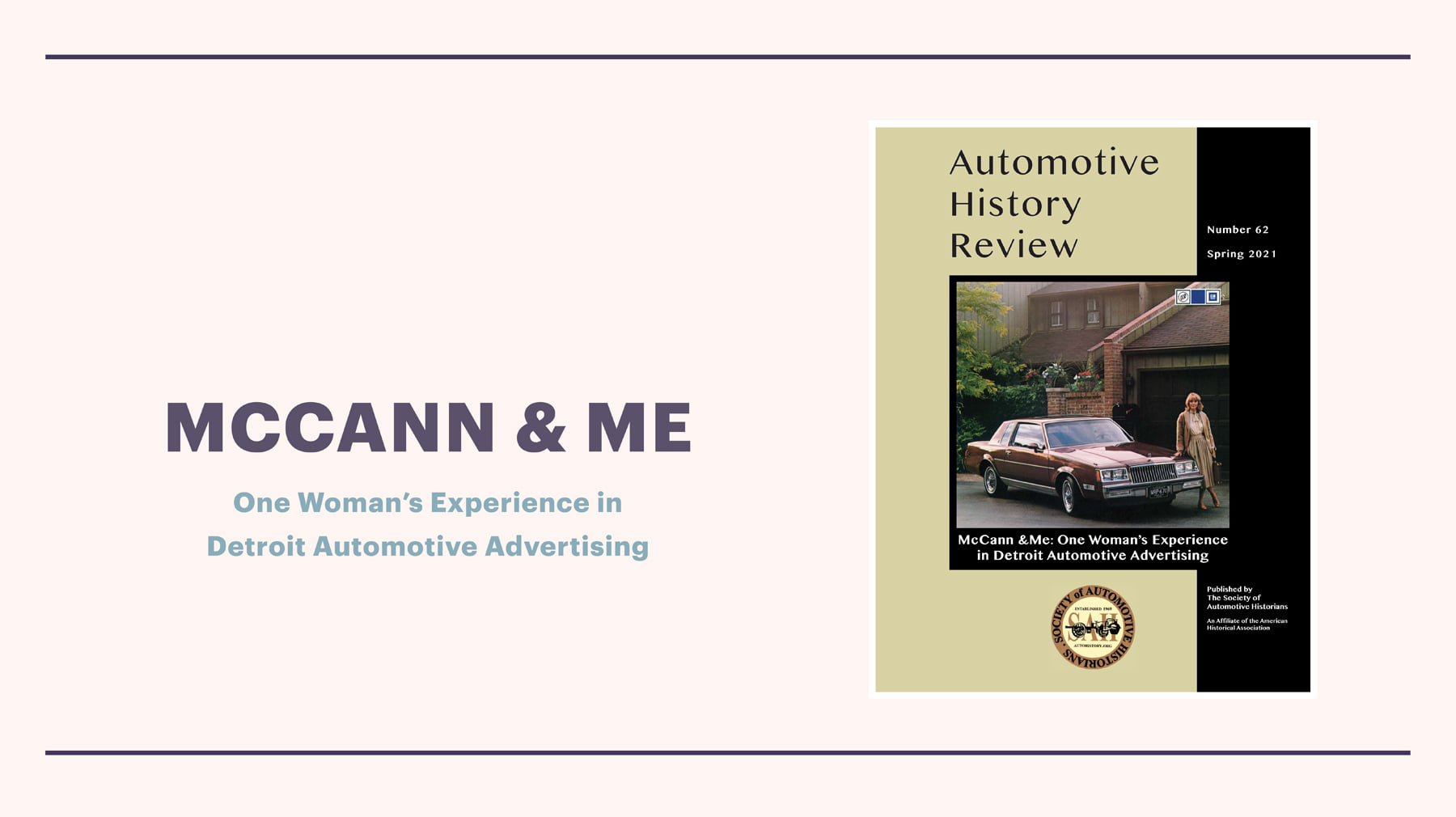
On Tuesday, December 1, 2021 I was honored to present “McCann & Me: One Woman’s Experience in Detroit Automotive Advertising” to an avid group of auto historians and enthusiasts at the Automotive Hall of Fame in Dearborn, Michigan. Organized by the Leland Chapter of the Society of Automotive Historians, and led by President Brian Baker, it was an amazing opportunity to share my experiences working as a woman in automotive advertising nearly 40 years ago.

There was a great crowd on hand who were gracious, enthusiastic, and attentive despite my bumbling presentation style, as well as a few surprise guests in the audience. Brian hosted a question and answer session after the presentation and I enjoyed interacting with the audience and giving a few shout outs to folks – I mean you Top Hat John – who have helped my woman-and-car journey along the way. It was great fun to share stories and memories with knowledgeable Detroit area folks.

Detroit auto photographer Jim Secreto with the author

It was an evening I will not soon forget, and I thank Automotive Hall of Fame President Sarah Cook for the opportunity and Brian for encouraging me to share my story. And I can’t forget the absent-but-present-in-spirit National SAH President Bob Barr, who was the individual responsible for convincing me to write the article.

Women in Post War Car Culture

While in graduate school during the 2000s, I devised an independent study focused on my growing interest in the relationship between women and cars. What follows is one of the response papers in which I consider how the construction of women as consumers in post World War II automobile culture served to limit women’s possibilities rather than expand them.

“American Car Culture” was created through the serendipitous confluence of a number of historical and social events in the years following World War II. Prosperity, promise and peace contributed to a fascination and a desire for cars that went beyond practicality and usefulness. As the documentary Tails, Fins and Drive-Ins suggests, twenty years of hardship and conflict created a “national obsession with obtaining the elusive American Dream,” a dream often realized through car ownership. Americans sought a reward for years of self-sacrifice; the automobile not only symbolized an “unlimited supply of economic luster,” but represented a promising and prosperous future as well. Television also contributed to the development of car culture. Its invention coincided with the growing desire to own a car, and television promoted such desire through programming and advertising. The development of a national freeway system, to accommodate the growing number of automobiles, not only changed the landscape of the United States, but also created a demand for family destinations such as motels, drive-in movie theatres and in-car dining. As Mark Foster writes in A Nation on Wheels, the automobile “not only influenced where Americans lived, worked, commuted and ran daily errands, [but] the automobile helped shape many of their leisure activities” (65).

Perhaps more important, as Joseph Interrante in “The Road to Autopia” attests, is the role of the automobile as “simultaneously a cause and consequence of the rise in consumerism” (90). The automobile emerged, both literally and figuratively, as the vehicle of the American consumer society. As Interrante writes, “made possible by the automobility of the car, metropolitan consumerism made the automobile a transportation necessity” (91). A burgeoning economy, and the suburbs that grew alongside the expanding highways, created a desire for products and the ways and means to purchase them. And the role of consumer, considered vital to a healthy economy, was most often awarded to the woman who remained at home.

While few dispute the automobile’s influence in the growth of the American consumer culture, little mention is made of another important “event” that helped set consumerism into motion. And that is the return of women to the domestic sphere after World War II. During the Second World War, women entered the workforce to take over the jobs left by husbands, fathers and brothers enlisted in the armed services. Once victory was attained, women were “encouraged” to leave paid employment in order to create welcoming homes for soldiers returning from war. Just as working in industry was deemed “patriotic” during wartime, setting up housekeeping and establishing families was considered a duty to country. Women’s isolation in the newly developing suburbs made owning a car a necessity, especially in the newly prescribed role as consumer.

Interrante asserts, “[the automobile] especially liberated women from the home” (99). In The Automobile Age, James Flink concurs, as he writes, “automobility freed […] women from the narrow confines of the home and changed them from producers of food and clothing into consumers of nation-brand canned goods, prepared foods, and ready-made clothes” (163). However, the automobile did not lessen the number of women’s domestic responsibilities; rather, it converted them into consumer duties. The freedom referred to by Interrante and Flint is misleading. After World War II, women were expected to leave the “masculine” work force to reassume the proper, culturally approved gender role of wife and mother. Ascribing women with the role of “consumer,” while bolstering the economy, also served to reinforce the common belief that woman’s place is in the home, unless, of course, she is in the car purchasing products for that home. As Ruth Schwartz Cowan writes, ‘by mid-century, the automobile had become, to the American housewife of the middle classes […] the vehicle through which she did much of her most significant work, and the work locale where she could be most often found” (Flink 164).  So while the car culture that emerged after the Second World War opened up exciting new possibilities, experiences and meanings for men, it effectively closed them for women. The automobile as a symbol of rebellion, power, status, and sex appeal became part of masculine car culture. Representations of women in popular car culture, Foster tells us, are primarily “appendages or passive observers to be impressed by powerful machinery” (85). While women may have originally been “enamored,” in the words of Flink, with the possibilities of automobility, such dreams were rarely brought to fruition. In the golden age of American car culture, the automobile symbolized woman’s identity as consumer, and reinforced the culturally prescribed gender role as wife and mother.

Flink, James. The Automobile Age. Cambridge: MIT Press, 1990.

Foster, Mark. Nation on Wheels: The Automobile Culture in American Since 1945. Belmont CA: Thomson, Wadsworth, 2003.

Interrante, Joseph. “The Road to Autopia: The Automobile and the Spatial Transformation of American Culture.” The Automobile and American Culture. David Lewis & Laurence Goldstein, eds. Ann Arbor: University of Michigan Press.

Tail Fins and Drive-Ins. 1996. Allumination Filmwork.

Volti, Rudi. Cars and Culture.: The Life Story of a Technology. Westport CT: Greenwood Press, 2004.

Women Drive The W Series

I was recently asked to submit a chapter on women and motorsports to include in an upcoming collection of essays on motorsports history. As the subject is quite broad, I chose to focus on women-only racing. What follows is an excerpt from the upcoming ‘From Powder Puff to W Series: the Evolution of Women’s Only Racing’ from Life in the Fast Lane: Essays on the History and Politics of Motor Racing. This particular extract addresses the W Series, the most recent, prominent, and perhaps most promising women-only racing series.

In the early 2000s, the women’s racing series emerged as an alternative all-female racing concept, created to address the lack of women in the higher echelons of motorsport by providing more openings for more women to develop the skills and experience necessary to move on to the next level. While earlier attempts at the women’s racing series met with varying degrees of success, the most recent and most promising format is the W Series, which just completed its second successful season.

2019 & 2021 Champion Jamie Chadwick

The W Series was introduced in October 2018 as “a unique ground-breaking free-to-enter single-seater motor racing series for women drivers only” (W Series). The all-female Formula 3 championship series was conceived to promote female drivers into Formula One. The W Series objective, notes organizer Catherine Bond Muir, is not only to provide top notch racing for spectators and viewers on a global scale, but also to “equip its drivers with the experience and expertise with which they may progress their careers.”

In its inaugural season, 18 drivers representing 13 countries – chosen from nearly 100 of the top female drivers across the globe – participated in six races at some of Europe’s premier Formula 1 racing venues. Prior to taking the wheel, the women were required to participate in rigorous training programs centered on driving techniques, simulator exposure, technical engineering approaches, fitness, and media, conducted by instructors with Formula 1 experience. Efforts were taken to address the inequalities that plague many of the world’s premier racing series. Drivers were not expected to attain sponsorships in order to participate nor to shoulder any of the financial responsibilities; rather, all expenses  were covered by the series organization. The women competed in identical series-owned Tatuus T-318 Formula 3 cars rotated after each race to remove any hardware advantage from the competition. Not only was the series free to enter for all its drivers, but awarded significant prize money [total of $1,500,000 US] all the way through to 18th place in the final standings.

The 2019 series was a modest success; it experienced an increase in viewer interest and ratings after each race. By the end of the first season, the W Series was being broadcast in over 50 countries reaching up to 350 million households. The first W Series champion – Britain’s Jamie Chadwick – took home a $500,000 prize and was subsequently named as a development driver for the Williams Formula 1 Team. At the end of the season it was announced that in 2020, the top eight drivers in the championship would collect points toward an FIA Super License, an important entryway into Formula 1.

Chadwick leading the pack

The COVID pandemic cancelled the 2020 W Series. However, it was announced that as part of a new partnership with Formula 1, the W Series would be on the support bill for eight Grands Prix in 2021. The partnership not only lends legitimacy to the all-female series, but further underscores the W Series’ role in the preparation and promotion of female racers into the upper tiers of motorsport.

The 2021 season came to a close in October, with Jamie Chadwick once again finishing at the top of a very impressive group of drivers. However, despite the growing success of the racing series, there remains a bit of controversy not over the W Series itself, but the role it plays – or not – in the development and promotion of female drivers. W Series entered the racing arena under a cloud of controversy with much to prove. Not everyone – the media, racing organizations, race promoters, and the women themselves – was convinced a woman-only series was a step forward for female racers. W Series opponents argued that since motorsports is one of the few competitions in which women can compete directly with men, female racers should take every opportunity to do so. As male accomplishment is the barometer by which success in any field is most often measured, choosing to compete against women may be considered a sign of weakness, cowardice, or ineptitude. Other objections focused on the prize money offered to female competitors, arguing that the considerable monetary awards could be better distributed. When the W Series was announced, veteran driver Pippa Mann asserted, “I strongly believe, in the firmest possible terms, that this money should be spent helping field those same racers in real cars, in real series, in non-segregated competition” (qtd in Hall). 

An early representation of the woman driver

The debate surrounding the W Series echoes that which has accompanied most configurations of female motorsport since Powder Puffs first entered the racing arena. For much of its existence, women’s racing has been constructed as a frivolous and inconsequential sideshow, a trivial endeavor, a catwalk of second-rate drivers in pink racing suits. Although women’s racing has come into its own in the twenty-first century, it cannot completely escape such long-standing and disparaging associations. It is not surprising, therefore, that many choose to dismiss all-female racing as way to distance themselves from these pervasive and sexist stereotypical representations. Secondly, throughout automotive history, women have been portrayed as inferior drivers. In the early auto age, writes automotive scholar Virginia Scharff, “critics of women drivers […] cited three presumed sources of women’s inferiority at the wheel: emotional instability, physical weakness, and intellectual deficiencies” (26). These assumed biological, gender-induced character deficits have carried over into motorsports, where women are considered less able to perform in a competitive field, or, as Pflugfelder writes, are thought of as “something less than a driver” (417). To be female in segregated racing such as the W Series, therefore, carries the stigma of inferior and ‘less than.’ To prove oneself as legitimate, some contend, it is imperative to compete against men. As Straus asserts, “I didn’t become a race car driver to be the ‘best woman out there’” (qtd in Gilboy).

W Series organizers and promotors have countered criticism by focusing on the increased possibilities such a series offers for female racers. W Series leaders argue this can be accomplished through the reduction of obstacles that hamper women throughout the tiered racing system, the elimination of individual financial responsibility, and the establishment of programs that encourage women’s motorsports involvement at a young age.

Throughout motorsports history, the lack of opportunities for women has greatly limited their participation. A series without men opens up significantly more racing possibilities for female racers. More women racing in high-profile, high-performance events will lead to the normalization of women’s motorsport participation. More women on the track will lead to increased media coverage and publicity, bringing the world of motorsports to new, younger, and female audiences. If women’s racing becomes normalized, young girls are more likely to develop an interest, and more parents may consider karting – the predominately male entryway into motorsports – for their racing-obsessed daughters. 

In a recent interview, Chadwick addresses the criticism often directed at women’s racing in general and the W Series in particular. Her repeated success in the W Series has led the media to position Chadwick as a model of women in motorsports, a weight she does not take lightly. As she explained, ‘What [the W Series] does is give massive visibility and exposure to women in motorsport, giving us the opportunity to be racing at such a high level. […] Without W Series, there’s a handful of drivers that wouldn’t have that opportunity. […] And to be completely honest, I think I would have struggled to see my career progress […] without W Series because I think the season’s racing helps for sure” (Southwell).

W Series organizer Catherine Bond Muir notes, “Women in motorsport are something of a rarity today, but with W Series as a catalyst, we hope to transform the diversity of the sport—and perhaps even encourage more girls into professions they had not previously considered. That will mean as much to us as helping develop a female Formula 1 world champion” (qtd in Gilboy). 

Gilboy, J. (2018a) ‘W Series: Everything to Know About the Women-Only Racing Championship’, The Drive. 13 Oct.

Hall, S. (2019) ‘3 reasons we should be paying attention to the W Series’, Autoweek, 3 Jul.

Pflugfelder, E. (2009) ‘Something less than a driver: toward an understanding of gendered bodies in motorsport’, Journal of Sport and Social Issues, 33(4) pp. 411-426.

Scharff, V. (1991). Taking the wheel: women and the coming of the motor age. Albuquerque: University of New Mexico Press.

Southwell, H. (2021). ‘Jamie Chadwick Feels the Weight of Representing Women in Motorsport.’ The Drive, 23 Oct.

W Series (2020) ‘W Series: a game changer.’ 6, Feb.


Foreign Cars & the Woman Driver

While working on my master’s degree at Eastern Michigan University in the early 2000s, I devised an independent study focused on my growing interest in the relationship between women and cars. What follows is one of the response papers in which I consider the appeal of non-made-in-America vehicles to female motorists. While this paper focuses on a particular period of American auto history, what is interesting is that, since this paper was written, American automakers have ceased production on small cars and sedans, conceding their manufacture to Asian and European car companies.

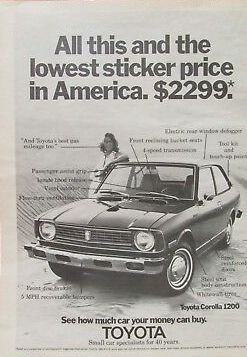
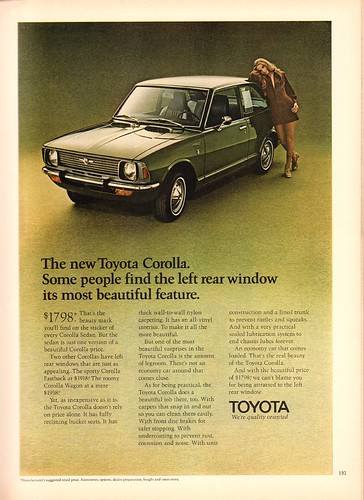
As I conducted research on the “chick car” last year, I discovered that the automobiles most often included in this category are foreign models. The Mini Cooper, VW Beetle, Mazda Miata and Toyota RAV4 appeal to women because they are affordable, cozy, well-designed and most important, fun to drive. Therefore, as I read Flink’s recounting of the foreign car invasion in The Automobile Age, I couldn’t help but wonder if the success of the foreign car in this country is based in part on its appeal to a segment of the car-buying public traditionally ignored by the US automotive industry. I wonder, in fact, if women’s embrace of the small, quick, comfortable and affordable foreign car is somewhat responsible for its increasing popularity, as well as for the decline of domestic vehicle sales. While it is certainly an overstatement to imply the bleak state of the US auto industry is due to its inherent patriarchy and dismissal of women’s interests, there remains enough evidence to suggest that the failure to build a car that appeals to women, in the form of a smaller, quicker, more economical and more technologically advanced vehicle, is a contributor to the industry downslide. 

Automobile history tells us that US car manufacturers have traditionally designed separate models for European and Asian markets. As James Flink writes, “like most other European auto manufacturers, and in marked contrast to their American operations, Ford-Europe and GM-Europe both concentrated in the postwar decade in producing small, fuel-efficient cars” (295). The significant difference in cars built for foreign rather than domestic consumption suggests automakers responded to such variations as geography, fuel cost, road conditions and government restrictions rather than on cultural or social requirements and desires. Simply put, US automakers built small cars for foreign markets because the roads are narrow, not because the citizens want or need a smaller, more efficient automobile. 

Domestic automakers built big cars for the big, wide open US highways, without taking into consideration that driving conditions do not necessarily dictate what all drivers want. Industry leaders failed to notice that many of the qualities that appeal to foreign car buyers are also attractive to female drivers. US carmakers have historically refrained from developing small cars because, as Flint remarks, “large cars are far more profitable to build than small ones” (284). Such a sentiment ignores the fact that the majority of US automobiles produced before 1990 were simply too large and cumbersome for the average woman to drive comfortably. I know that when I learned to drive, I had to place a pillow behind my back in order to engage the clutch pedal. My sister, who is even shorter than I, sat on a cushion in order to see over the car’s hood. During the 1950s, Christy Borth of the Automobile Manufacturers Association is quoted saying, “it is foolish to use two tons of automobile to transport a 105 lb blond” (Flink 283). While the Japanese may have considered the smaller stature of its citizenry when designing automobiles, American car makers systematically ignored the more diminutive half of its population as it continued to blissfully crank out big, bulky automobiles. 

What Flink doesn’t mention, but which bears consideration, are the meanings associated with a “big” car. Not only is “big” associated with masculinity (today’s Ford F150 Trucks are a prime example), but also reflects America’s position of itself, the assumed “big boy” of the world. No doubt US car manufacturers think of themselves as big and male (and the Japanese, on the other hand, as small and feminine, and therefore of less value). Because the US car industry appears to have stock in the axiom “bigger is better,” American automobile manufacturers, as Flink writes, “remained convinced well into the 1960s of their invulnerability to foreign competitors in the world as well as the US market” (294). 

In A Nation on Wheels, Mark Foster suggests that such arrogance prevented automakers from considering other options in automobile production. Isolated from both criticism and the real world, auto executives convinced themselves that American car manufacturers “knew all there was to know about making and marketing cars” (143). Cloistered and isolated with individuals very much like themselves, corporate automakers “were seldom exposed to those who might disagree with them, particularly within the corporation” (143). Detroit auto men seemed incapable of viewing the car industry through eyes other than their own. As Flink tells us, while American automakers continued to build one standardized product in the largest possible volume, “Europeans fashioned domestically produced products for very different national market conditions” (299). The Europeans considered the divergent needs, driving styles and economic means of its potential buyers. US auto manufacturers, on the other hand, told consumers what to buy based on their own monolithic vision. European and Asian car manufacturers attempted to appeal to a wide variety of drivers, which of course, included women. Detroit automakers continued to profess they knew what the American public wanted without bothering to ask them.

Foreign cars are often less expensive than equivalent American-made products. Such lower priced automobiles, Flink reminds us, are often “a combination of lower wages, higher labor productivity and a unique system of material controls and plant maintenance” (335). As women have lower incomes than men, the lower purchase price and maintenance costs make foreign automobiles more attractive. And as many women remain responsible for maintaining the household budget, the value of an import often prompts its purchase. Most important, however, is that European and Asian manufacturers have traditionally addressed the needs of its customer base and have offered them options.

In Trouble in the Motor City, Joe Kerr writes, “over-confident from decades of total domination of American markets, the car-makers were still building their unwieldy and antiquated products when the oil crisis hit in 1973” (135). If we consider the masculinity embedded in American car culture, represented not only by the big, unwieldy vehicles but also those who produce them, the reluctance to build a smaller and more efficient car becomes understandable. The Japanese automobile, built by and for those smaller in stature, may be considered feminine and therefore undesirable. While such characteristics may explain why the foreign car has special appeal to women, it also suggests why the US automotive industry has been so reluctant to embrace the smaller automobile. As Bayla Singer, in Automobiles and Femininity writes, “in order to classify the qualities of the automobile driver as fundamentally masculine, thus perhaps allowing even the frailest male office worker to assert his masculinity, female use of the automobile must be classified as marginal or trivial” (39). Thus the disparagement of the foreign car, which includes the category of “chick car,” stems not only from its compact size, but also from the stature of the person who drives it.

Flink, James J. The Automotive Age. Cambridge MA: The MIT Press, 1988.

Foster, Mark. Nation on Wheels: The Automobile Culture in American Since 1945. Belmont, CA: Thomson, Wadsworth, 2003

Kerr, Joe. “Trouble in the Motor City.” Autopia: Cars and Culture. Peter Wollen and Joe Kerr, eds. Reaktion Books, 2002. 125-138.

Singer, Bayla. “Automobiles and Femininity.”Research in Philosophy and Technology. Vol. 13, Technology and Feminism. Greenwich, Conn.: JAI Press, 1993. 31-42.

The Male Automotive Historian and the Woman Driver

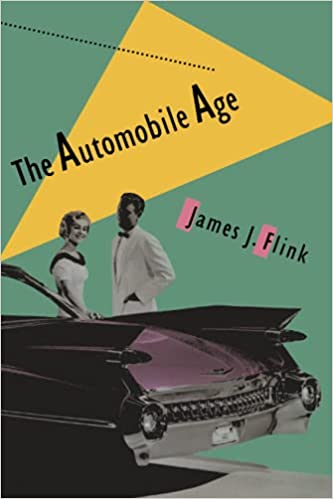
The Automotive Age by James J. Flink

While working on my master’s degree at Eastern Michigan University in the early 2000s, I devised an independent study focused on my growing interest in the relationship between women and cars. What follows is one of the response papers that addresses the problems of male automotive historians and the woman driver. Written in 1988, The Automotive Age was considered revolutionary in the field of social automotive history; however, its understanding and treatment of the female motorist left much to be desired. Three years later, Virginia Scharff made the first attempt to rectify Flint’s misconceptions in the groundbreaking Taking the Wheel: Women and the Coming of the Motor Age.

In “Gender Wars,” Clay McShane writes that in the early twentieth century, the motorcar “served as a battlefield in the wars over gender roles” (149). It is interesting, therefore, that auto historian James Flink, in his highly regarded text The Automobile Age, makes little reference to gender except in the most stereotypical of ways. Flink appears to be unaware of the effect of the automobile on gender relations; he fails to recognize how the actions of the auto industry during this time period often reconfigured and reinforced cultural gender roles that remain to this day. Flink’s failure to acknowledge this phenomenon is especially evident in his discussion of two events in early automotive history. The first is his discussion of the manufacture and marketing of the electric car; the second concerns the establishment of the Ford Motor Company’s Five Dollar Day. 

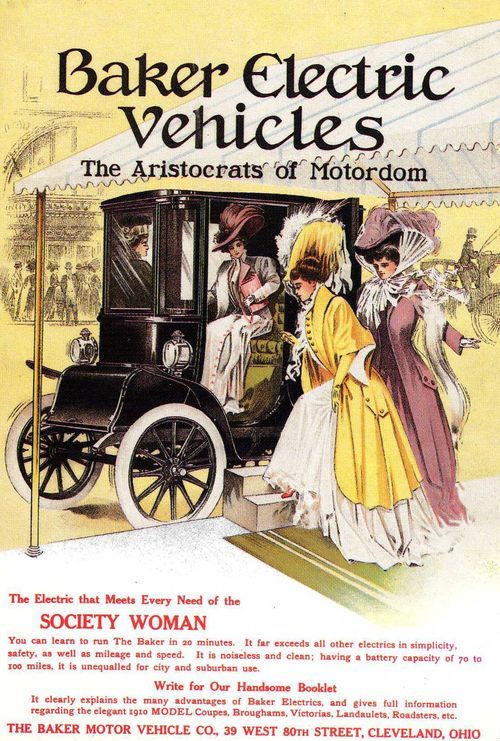
Of the electric car, Flink writes, “it was especially favored by women drivers, who were concerned foremost about comfort and cleanliness […]” (10). Such a sentiment suggests the electric car was developed in order to fulfill the needs and desires of the woman driver. However, what is more likely is that the electric car was not developed as a women’s car at all, but rather, was marketed to women in order to keep them from getting behind the wheel of the faster, more powerful gasoline powered motorcar.  Rather than create cars specifically for male or female consumers, automakers called upon prevailing gender ideology to create ‘natural’ markets for both the electric and gasoline-powered cars.

Early electric auto advertisement

The gasoline-powered automobile was gendered male from the very beginning. As McShane tells us, “The changes wrought by nineteenth-century industrialization profoundly threatened many traditional sources of male identity” (151). It became necessary, therefore, for new cites of masculinity to emerge. The automobile provided the male population with such a location. The characteristics of the automobile quickly became conflated with masculinity. Not only did the early gasoline-powered motorcar require physical strength and some mechanical ability to operate, but it also provided male drivers with opportunity to exert control over a machine during a time when industrial machines monitored their factory lives. The act of driving soon became defined by qualities  – aggression, control, and steady nerves – considered masculine. And it also served as a form of liberation, as men often got behind the wheel to escape occupational and familial responsibilities. As McShane suggests, “men defined the cultural implications of the new automotive technology in a way that served the needs of their gender identity” (149).

The electric car, on the other hand, symbolized that which was not masculine. It was slow, clean, easy to handle, and could not travel great distances. It did not offer the speed, power, driving range and freedom that characterized the gasoline-powered car. As the opposite of masculine, the electric car became associated with femininity, and was therefore considered especially appropriate for the female driver. While the electric car may not have been developed specifically for women drivers, the characteristics that became attached to it, labeled feminine by the automobile culture, deemed it an inappropriate vehicle for men. 

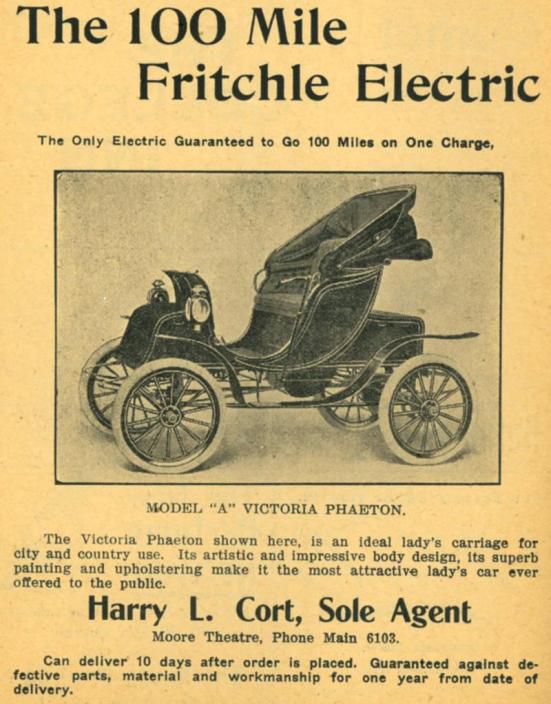
Fritchie Electric – ‘the ideal lady’s carriage’

While Flink suggests women desired the electric car, it is more likely that the car was marketed to women to prevent them from driving gasoline-powered automobiles and infringing on masculine territory. As Virginia Scharff writes, “Women were presumed to be too weak, timid and fastidious to want to drive noisy, smelly gasoline-powered cars” (37). Flink’s suggestion that women eagerly accepted the electric car and the gender roles that accompanied it is erroneous; the majority of women drivers were aware of the electric car’s limitations and often desired a vehicle that would go faster and farther. However, the gender ideology associated with electric and gasoline automobiles was promoted and encouraged, and soon became ingrained in the culture. The gendering of automobiles not only reinforced cultural notions of masculinity and femininity, but had a profound influence on the development and marketing of automobiles as well. As Scharff suggests, the electric starter, which made the gasoline-powered car almost as easy to drive as the electric model, would most likely have been available sooner had the auto industry been more willing to open up automobility to the female population. 

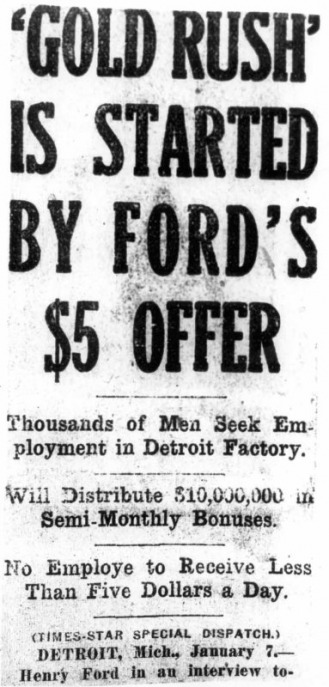
Flink’s second lack of gender consciousness is also evident in his discussion of the family wage and the Five Dollar Day. Flink describes the Five Dollar Day as Ford’s boldly conceived plan “for sharing profits with his workers in advance of their being earned” (121). The Five Dollar Day doubled the going rate of pay while shortening the workday by two hours. Ford’s policy was based on the notion that a worker should earn enough to provide for his dependant wife and children. The Five Dollar Day served to establish and reinforce his conviction that the husband should be the family breadwinner, and that women’s place was in the home. Thus the Five Dollar Day not only served as a form of social control over workers and the work process, but also firmly established appropriate gender roles in both the workplace and home. As Martha May writes in “The Historical Problem of the Family Wage,” “the underlying premises of the family wage made a dependent family essential to a preferred standard and to the notion of ‘normal manhood'” (402). The exclusion of benefits from those who did not fit Ford’s concept of the “family,” i.e. married women with working husbands, served to reinforce, economically and ideologically, proper roles for women and men. The family wage ideology instituted by Ford, and the gender roles that accompany it, has survived as an important element in our culture and our economy. In The Automobile Age, Flink describes the Five Dollar Day as an example of Ford’s role as an “exemplary employer regarding monetary remuneration” (120). What Flink fails to notice, however, is that Ford’s Five Dollar Day has had a lasting impact on how men’s and women’s work is perceived.

While The Automobile Age offers a wealth of information on the automobile and car culture, Flink fails to question or analyze the role the automobile has played in establishing and reinforcing cultural gender roles.

Flink, James J. (1988). The Automobile Age. Cambridge, Mass: MIT Press.

May, Martha. “The Historical Problem of the Family Wage: The Ford Motor Company and the Five Dollar Day.” Feminist Studies, vol. 8, no. 2, 1982, pp. 399–424.

McShane, Clay. “Gender Wars” in Down the Asphalt Path: The Automobile and the American City. New York: Columbia University Press, 1994.

Scharff, Virginia. Taking the Wheel: Women and the Coming of the Motor Age. Albuquerque: University of New Mexico Press, 1991.

Just One More Car Book

One of my favorite auto sites is Jalopnik, self-defined as ‘a news and opinion website about cars, the automotive industry, racing, transportation, airplanes, technology, motorcycles and much more.’ While the site has its detractors, I enjoy it because its staff tends to be younger, more diverse, and dare-I-say less conservative than many of the more traditional online locations devoted to cars. It is part of Go Media, which includes sites devoted to pop culture, feminism, Black news and culture, and irreverent news commentary [e.g. The Onion], which can certainly throw light on its more liberal leanings. While the majority of articles are serious and well-informed reflections on the automobile, the auto industry, and automotive events, at least once a week a story appears that can only be described as ‘fun.’

Part of the author’s automotive book collection.

One of those ‘fun’ articles from last spring was devoted to a collection of rare automotive books  – 643 to be exact – that sold for ‘more than the price of a new car.’ In reporting on the sale – as well as her own attempt to acquire the collection through a modest offer [she was significantly outbid]- the author reflected on her own car book collection and her unwavering desire to expand it. Through membership in various automotive organizations, most notably the Society of Automotive Historians – I have come recognize the desire to collect automotive literature to be an obsession, if not an addiction, among a good number of automotive enthusiasts. I myself am somewhat guilty of this need to accumulate car books. While working on my various research projects, I have discovered that it is often easier and less expensive to purchase a book than to track it down at a library, particularly when gas, parking, and time are considered. As I have discovered, purchasing and reselling out-of-date books – not only automotive but an endless selection of subjects – has become its own little industry. While I don’t quite understand how someone can make a profit selling books for less than a dollar, I am more than happy to shell out a buck or two for a volume that might be a useful resource for one of my ongoing or future women-and-car projects. As literature on women’s automotive history is limited, I was thrilled to find a good selection of books on this subject by noted historians and cultural scholars including Virginia Scharff, Katherine Parkin, Georgine Clarsen, Martin Wachs, and Julie Wosk. Books by James Flink, John Heitmann, David Gartman, John Rae, and Gijs Mom have helped me fill in the automotive history blanks in much of my work. When I needed resources on muscle cars, pickup trucks, popular music, and road trip films for papers on those topics, the $2 books picked up by someone from a discarded library collection helped filled the bill. Sometimes I will just scan Amazon with subject headings – e.g. women and cars, car culture, or automotive history – to see if there’s anything of interest I might purchase. My husband, who is more of a mainstream car buff, also collects car books, although his tend to focus on a particular individual, car brand, or historical event. Between the two of us we have quite an eclectic collection of automotive literature, overflowing from a number a few bookcases in our home.

While I originally – somewhat naïvely – thought I was somewhat alone in the auto book obsession, through my various encounters I have discovered car book collecting is a common affliction among car enthusiasts of all interests and persuasions. I daresay it is an addiction I am in no hurry to cure.

1949 Was a Very Good Year

Behind the wheel of my ’49 Ford

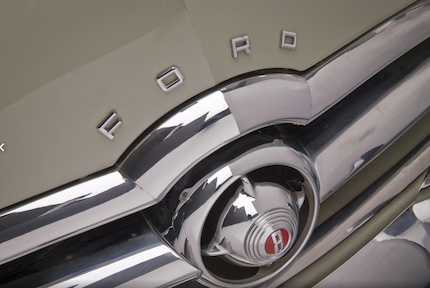
Jalopnik recently posed a question to its readers: “What car would you buy that was made the year you were born?” The query received nearly 250 responses, with answers that ranged from financially impossible choices such as a 1977 Countach LP400S to comments such as, “oh god, 1981 was a bad, bad year for cars.” As for me, I am one of the few lucky folks who owns a very cool car that happened to be produced the same year I came into the world. I fell in love with the 1949 Ford when I first spotted it a number of years ago at the Henry Ford Motor Muster in Dearborn, Michigan. There was something unflashy yet soothing about the smooth lines and unique “shoebox” profile. After an intensive search, a Seamist Green ’49 in fairly good condition was discovered in Pennsylvania, and after negotiations were made, was shipped to Michigan.

Distinctive ’49 Ford ‘bullet’ grille

While I chose the ’49 for its aesthetics, I soon discovered that in terms of automotive history, it is a significant automobile. Considered revolutionary when introduced, the ‘49 has often been cited as the “car that saved the Ford Motor Company.” After the Second World War, auto manufacturers were stuck in the past – producing remodeled designs of the prewar vehicles. Ford beat competitors Chrysler and General Motors with an all-new car, distinguished by its “smooth sided ‘envelope’ body and the airplane designed ‘spinner’ in the center of the grill” (thehenryford.org). Although the decision to completely revamp the Ford passenger car was risky, it turned out to be a wise and profitable decision. Ford produced more than a million units its first year of production. As noted by automotive historian Robert Tate, “never had any new car been received with such whole-hearted enthusiasm from the buying public.” New York Times auto writer Michael Lamm exclaims, “the ’49 Ford was born of desperation. It was sleek and daring by the standards of the day; it set benchmarks for styling and packaging, and it proved to be a hit with a car-buying public that was hungry for anything new […]” The ’49 established a clean, modern look that set a pattern for the Fords that followed it, and set the Ford Motor Company on a solid financial course for a number of years.

Just a little bit hot rod

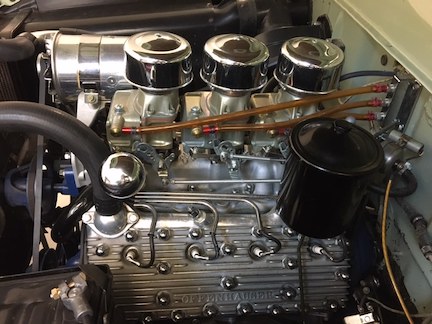
The 1949 Ford I purchased was in fairly good condition but needed work. When it was discovered that the original engine had been replaced by the previous owner, the decision was made to have some fun with the mechanics rather than attempt to restore the car to its original condition. We upgraded the electronic system, added tri-power carburetors, ‘Offy’ (Offenhauser) heads, and a Smitty muffler for a noisy, hot rod sound. The car was eventually repainted, and an electronic fan was installed to prevent the engine from overheating (a common problem among 1949 models.) I’ve taken the Ford to local car shows including the Motor Muster, even winning “Best in Class” at the 2019 Memories Classic Car Cruise-In. It can be a challenge to drive, but it is a lot of fun and gets a fair amount of attention.

When folks are puzzled as to why I chose this particular model of car, I simply tell them it’s because we were both born in Detroit in 1949.

The Henry Ford. Digital Collections. “1949 Ford V-8 Coupe.” theHenryFord.org

Lamm, Michael. “The ’49 Car That Saved Ford Motor.” New York Times 10 Sept 1999.

Tate, Robert. “1949 Ford: The Car, The Workers, and The Innovation.” Motor Cities 29 Sept 2014.

2021 [Virtual] PCA Conference

Pink Power Presentation

As the 2020 Popular Culture Association [PCA] was canceled due to COVID, the decision was made to go virtual in 2021. Despite my lack of confidence in all things technological, I decided to put aside my fears and submit a presentation to this year’s event. Since the PCA is one of the few conferences with sessions dedicated to vehicle culture, I always try to prepare something to present. Having a date in place provides me with the impetus to develop and map out a project for the conference; in turn, the input from conference attendees serves as encouragement to proceed with publication as the eventual goal.

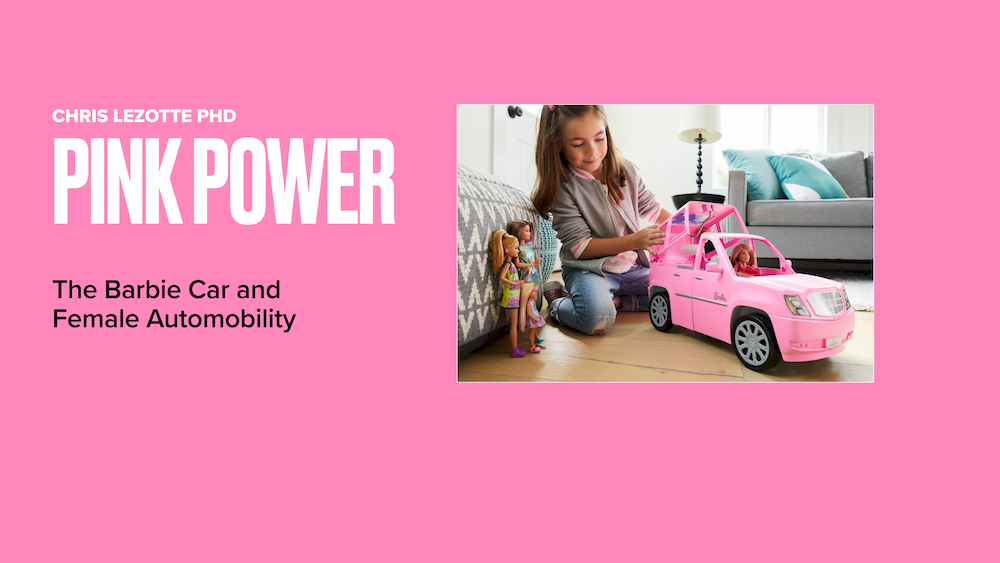
This year there were three sessions with a wide variety of topics and perspectives. The first session, focused on Vehicle History and Business, featured presentations on vehicle dwellers, an analysis of conflicting representations of the automobile in its earliest years, and a look at how the Korean automobile and gaming industry influence the global market. Vehicle Culture Across Industries – the second session – included an excursion to non-fictional motor racing through Grafton graphic publications, an examination of driving lyrics in the songs of Taylor Swift, and an argument dispelling the origin myth of the 1950s automobile fin design. Finally, the third session – Social Perspectives of Vehicle Culture, offered an investigation of the 1967 Impala as female in the Winchesters series, a lawyer’s perspective on the case for banning human-driven vehicles, and my own presentation, which looked at the influence of Barbie cars on the auto awareness of young girls.

While there were a few technical glitches in my presentation – it’s what happens when you ask a 72-year-old woman to serve as session chair – the talk went pretty well. I received a number of positive comments, helpful suggestions, as well as questions that provided me the opportunity to reconsider some of my arguments and revise some of my thinking. Although the presentation was stressful – in both preparation and execution – I always welcome the opportunity to present my work to a group of interested, informed, and curious auto enthusiasts and scholars. Next year – Seattle!