Since I began talking with women about their cars more than a decade ago, I’ve collected countless automotive stories. What has struck me most is how widely those stories vary, reflecting not only the women who owned the vehicles but also the types of cars they drove. The stories attached to classic muscle cars, as I noted in an earlier post, tend to be nostalgic. Many of the women I interviewed associated these cars with a significant person, a memorable event, or a cherished moment from the past. Stories about contemporary cars, by contrast, focus less on nostalgia and more on the role the vehicle plays in everyday life. In conversations with chick car owners, most women spoke about what the car enabled them to do, how it made them feel, and how it expressed their personal identity.
The chick car – a term that became popular during the early 2000s – was in many ways a response to the vehicle historically associated with the woman driver. Sturdy, spacious, and utilitarian, the “women’s car” – the ubiquitous station wagon of the 1950s and 1960s, the 1970 hatchback sedan, the popular minivan introduced in the late 1980s, and today’s downsized SUV and crossover – was recognized as the perfect vehicle for carrying kids and cargo.
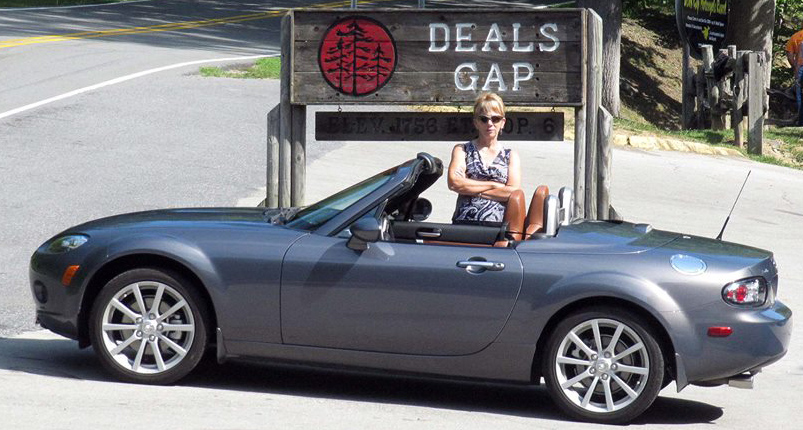
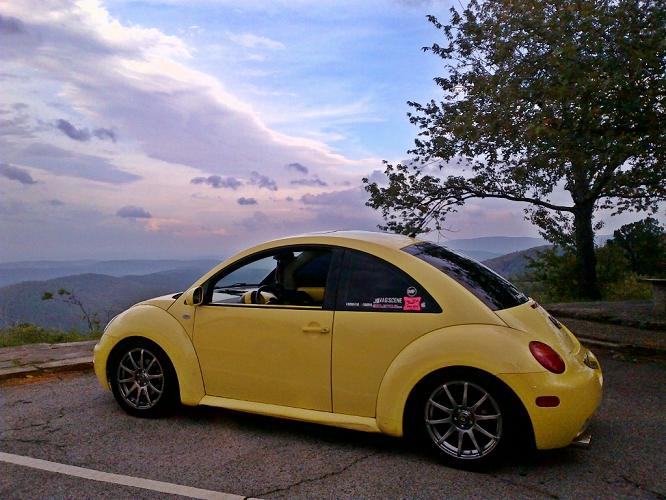
However, in the late 1990s, a new type of female driver emerged. She appeared in many guises: as a young single woman making her way in the world, a married professional focused on career, or middle-aged empty nester looking forward to a more independent life. Seeking to shed their domestic identities, whether temporarily or permanently, these women embraced a car that was in no way utilitarian, but rather, small, quick, stylish, and “fun.” This vehicle became branded in many automotive circles as the “chick car.” The most common cars in this category were the Miata, MINI, and VW New Beetle.
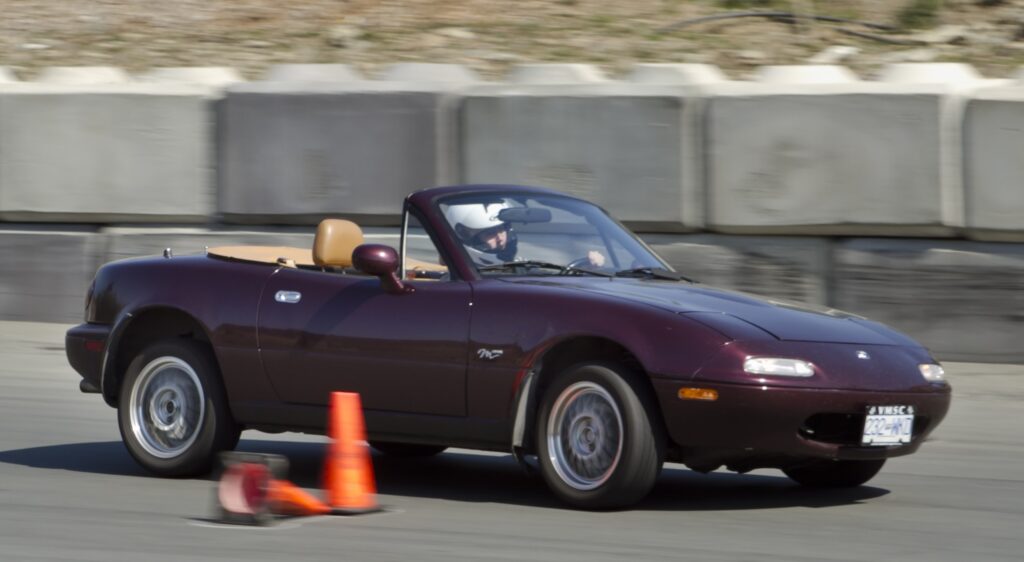
When chick car owners tell stories, they are accompanied not by nostalgia, but by joy. The small, nimble cars provide automotive experiences that cannot be duplicated by a heavy, cumbersome, and practical automobile. Many of the car stories related to me told of automotive adventures: road trips in which the journey – not the destination – was the point. The chick car owners often spoke of the pleasure and excitement of navigating “twisty, fun roads” in new and exciting places, often with organizations composed of similar-minded auto aficionados. As a 49-year-old human resources officer remarked of her participation in the “Italian Job” run in Venice, California, “It’s just so much fun. I’m giggling the whole time.” Rather than calling on the automobile solely for the performance of everyday tasks on suburban thoroughfares, chick car drivers find exhilarating new uses on country highways, scenic byways, and a multitude of “curvy mountain roads.” Many of the women spoke of driving the Tail of the Dragon, a legendary 11-mile stretch located at Deals Gap on the Tennessee – North Carolina border. Famous for its challenging driving experiences, the road features dramatic switchbacks, tight curves, and steep embankments with no intersecting roads or driveways. Unaccustomed to thinking of the automobile as a road machine, many women mentioned how they enjoyed preserving these new driving moments through journals, scrapbooking, and online photo albums. A 53-year old accountant, who keeps a photo of her first drive through the Dragon as computer wallpaper, remarked, “In the picture, I’m coming out of one curve, setting up for the next, and you can see a third curve in the distance. I have the top down, I’m wearing a fun hat, and you can my eyes reflected in the rearview mirror. A really cool picture.”
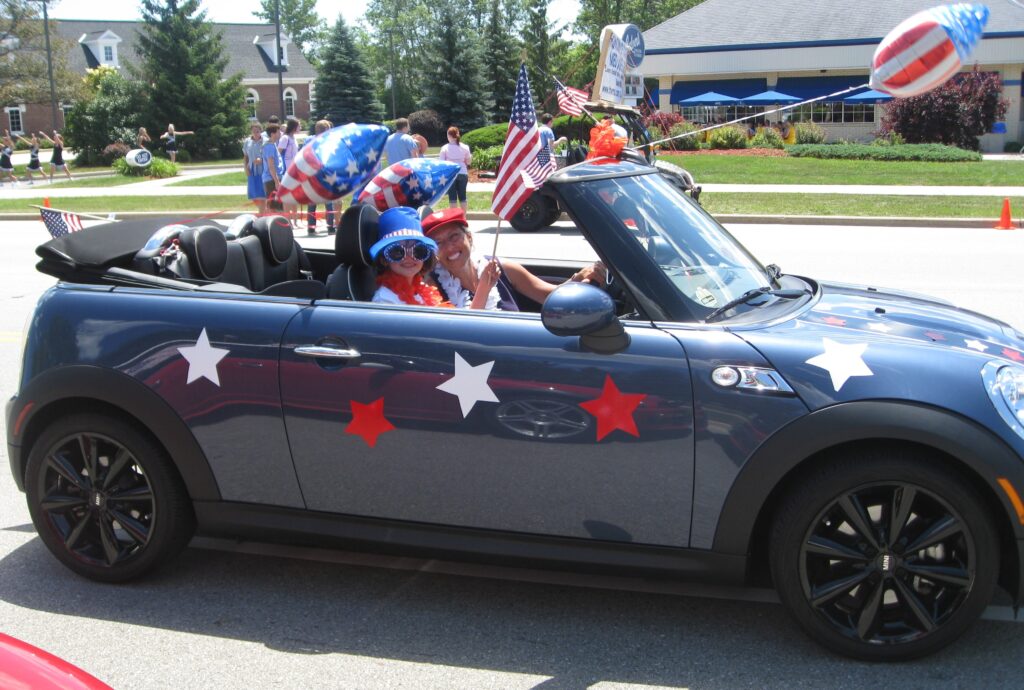
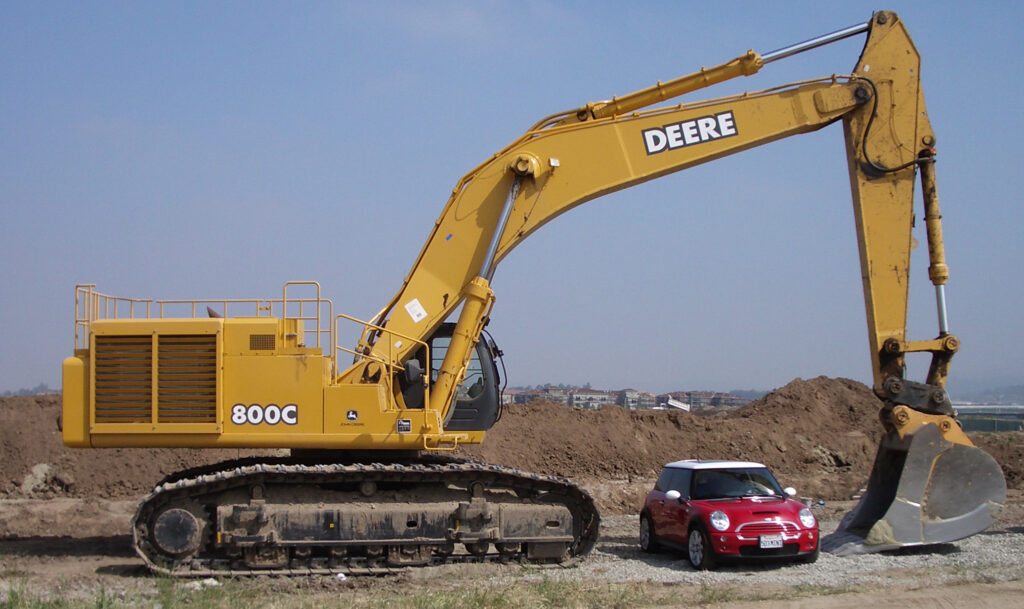
Although many told stories of driving trips and tours, some found pleasure in creating stories in which the car was the star. Because the chick is car is small, stylish, and unusual, the women who own them are continually thinking of new, imaginative, and fun uses for their respective Miatas, MINIs, and New Beetles. A 55-year-old community service officer created a photo book for her 2004 Mini Cooper. Armed with a tin of chocolate chip cookies as a “reward” for participation, she and a friend would drive aimlessly “looking for interesting places to take pictures of my car.” Some the photos included: ready to be scooped-up by a back hoe, parked next to a helicopter, in a firehouse, next to a fire truck, in a restricted area military bunker (with a helicopter escort), ready to be clobbered by Western Exterminator’s “Little Man” (Western Exterminators added this picture to their employee newsletter), on a nude beach, with bathing suits hanging from the car door, with Verizon Wireless’s “Can you hear me now” guy, looking very tiny next to a live elephant, and being driven by the Chick-fil-a cow (which broke the driver’s seat). A 58-year-old technical writer “did the trick photography that every single person got into the back seat of the MINI. And the last guy, he was six foot seven, got into the passenger seat and I opened the sunroof and his head was sticking up out of it.” A 45-year-old tech teacher awarded “Bertha” – her 2011 Mini – with its own Facebook page.
Ownership of a chick car is accompanied by experiences many women never thought possible. The stories the women tell are filled with humor, exhilaration, freedom, and fun. They disrupt the popular image of the woman driver, from one who is dutiful, serious, and cautious, to an individual who is carefree, adventurous, creative, and ultimately empowered. To the women who own them, the chick car is not merely transportation. It is transformative.