Argetsinger 2025

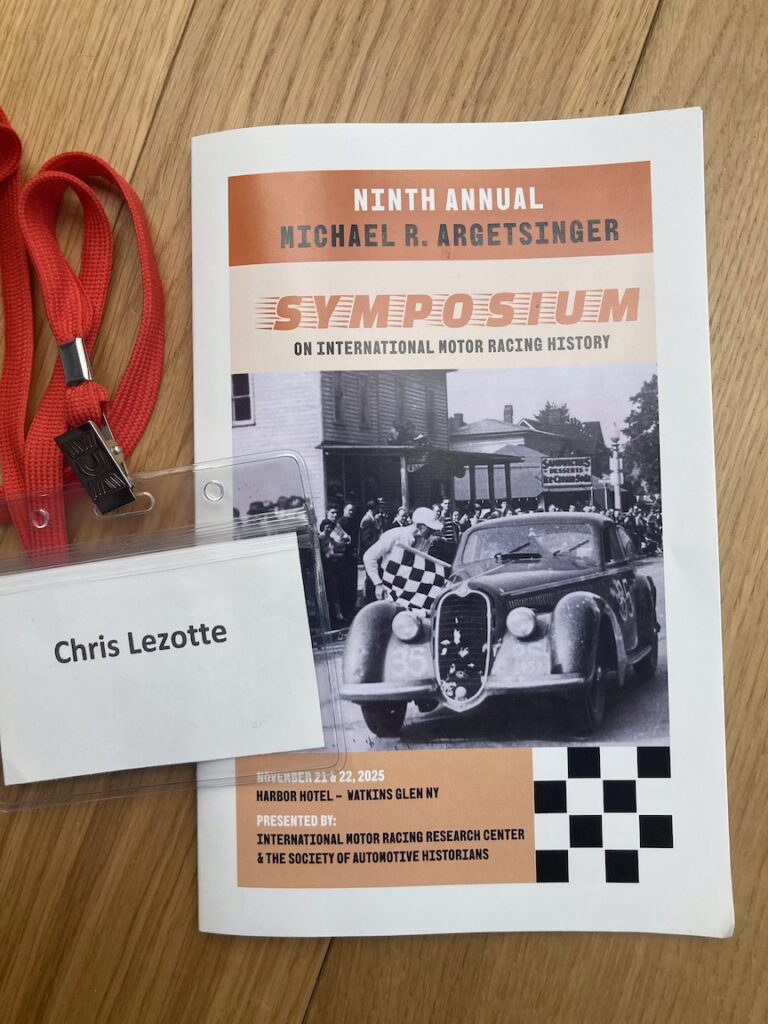
2025 Argetsinger Program, designed by me

The Michael R. Argetsinger Symposium on International Motor Racing History was started in 2015 as a joint effort between the IMRRC [International Motor Racing Research Center] and the Society of Automotive Historians. Other than a break during COVID, the symposium has been held annually, and has grown exponentially from three presenters in 2025 to 20 in 2024. The symposium has been traditionally held at the Watkins Glen International Speedway Media Center. This year the conference was scaled back; it was held in a new venue – the Watkins Glen Harbor Hotel – and limited to 14 presentations. This revised setup eliminated the ‘run over’ presentations and provided ample time for questions. Although the Speedway location was an interesting place to visit, it involved a long drive out of town on very hilly roads. Having the symposium in the hotel also provided a better environment for networking and camaraderie. The two-day conference also included a film festival and reception at the Watkins Glen Chamber of Commerce. Despite its historical significance as the origin of road racing, Watkins Glen is a sleepy town, especially during the off season. Being from the western part of the Eastern time zone, I was not used to darkness falling before 5PM which made for interesting walks around town.
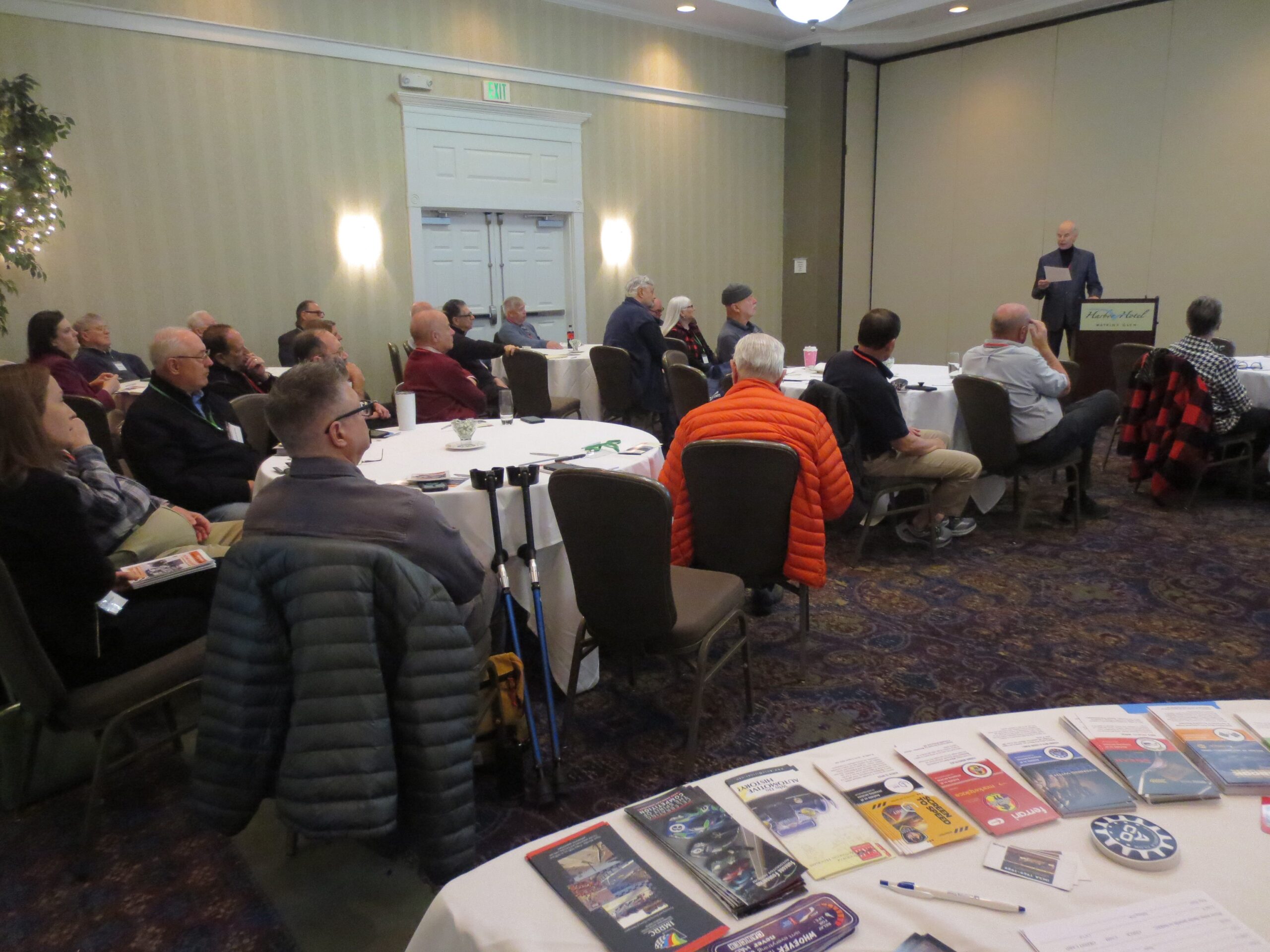
Presenter Jim Miller

I became involved with the Argetsinger when I travelled to the IMRRC to conduct some research for a paper on women-only racing a number of years ago. I presented at the conference the following year, and subsequently became part of the SAH contingent that organized the event. I presented a paper in 2024, but attended this year as a spectator. Although I am quiet and have often felt invisible at the gathering of so many motorsports experts [of which I am not], there was a perceptible difference in how I was regarded this year, no doubt due to my new role as SAH President. I received a dinner invitation for the first time in five years! But my new position allowed me to connect with many of the attendees in interesting ways, which I ultimately enjoyed. The only downside to the two days in Watkins Glen was the 3:15AM wake up call for my flight out of the two-gate Elmira airport.

Tech wiz Eric Monteraselli

The symposium was live streamed and converted to youtube for future viewing. If you have any interest in motorsport history, I suggest you check out the videos from this and past years. The presenters come from many disciplines – from academics to motor racing enthusiasts – so there is certain to be something for everyone. 
What’s Your [Car] Color?

A number of years back, as I pulled up to a stop light, I noticed a long line of vehicles in the next lane – four or five at least – that were almost identical in appearance. Although the cars represented different manufacturers, they were all small SUVs, and they were all black. Black, as it turns out, is the second most popular car color in the United States, representing 22% of the automotive market. White cars constitute one quarter of cars sold, with grey and silver contributing another 34%. During the golden age of car culture – the 1950s and 1960s, cars were not only bigger, but came in a wide variety of hues. The muscle cars of the 60s and 70s introduced us to colors that were bright and bold; Panther Pink, Vitamin C Orange, Grabber Blue, Plum Crazy Purple, and Rallye Red described the car, and the person who drove it, as outgoing, outrageous, and fun.

On the road today, cars that are not white, black, silver, or grey stand out, not just because there are so few of them, but because it makes one wonder what makes an individual go against the grain with such an unusual or bold color choice. Arm chair – and legitimate – psychologists have often contributed to stories that ask “what does your car color say about you?” 40 years ago, psychologists Peter Marsh and Collett discussed car color [as well as other automotive characteristics] in Driving Passion: The Psychology of the Car. The pair argued that the economic climate – booms and recessions – often affect the color of cars on the road. Booms feature cars of primary tones and bright colors – yellows, light blues, and reds – whereas when the economy is in decline, there is a tendency for people to select somber colors like greys, browns, and dark blues. Marsh and Collett also suggested that the aspect of personality a car reveals most accurately is “the person’s need for achievement.” Those with a high need for achievement will select cars with subdued colors; folks with relatively low levels of ambition will opt for bright colors including red and yellow.

The connection between car color and human personality remains a subject of interest today. In a recent article, Jaloponik notes how many people consider red to be an exciting color that lets others know “you’re passionate, intense, and ready for adventure.” The Today show goes a step further, asserting that the person who owns a red car is “sensual, dynamic, and outgoing.” Yellow cars, states Jalopnik, is associated with happiness, as it inspires people to “feel happier and more optimistic.” Today attests that the owner of a yellow car is likely to be joyful, has a sense of humor, and is young at heart. Today also suggests that an individual who chooses a dark blue car is confident, credible, and authoritative. If you find yourself attractive to blue cars, writes Jalopnik, “there’s a good chance you’re trustworthy, reliable, and calm.”

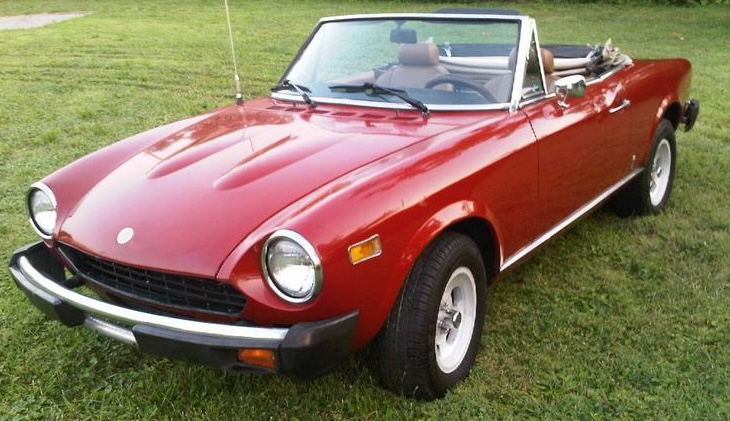
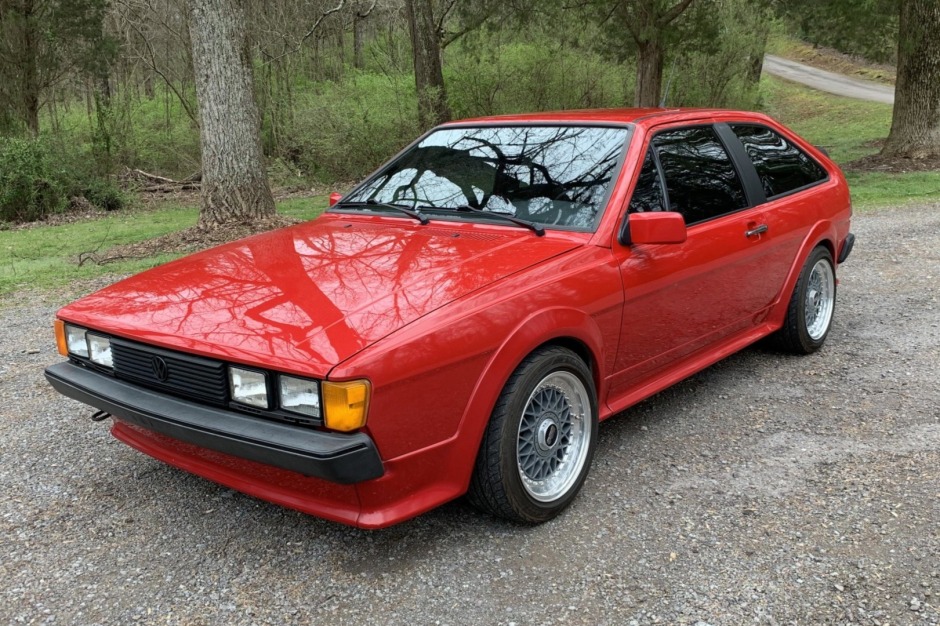
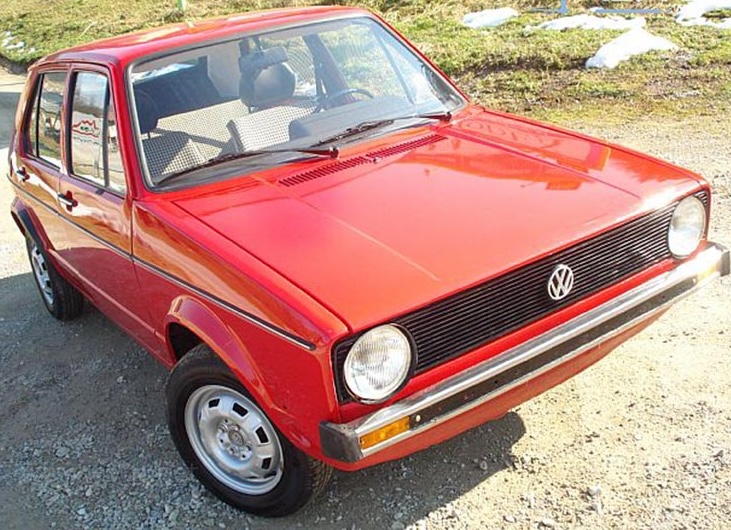
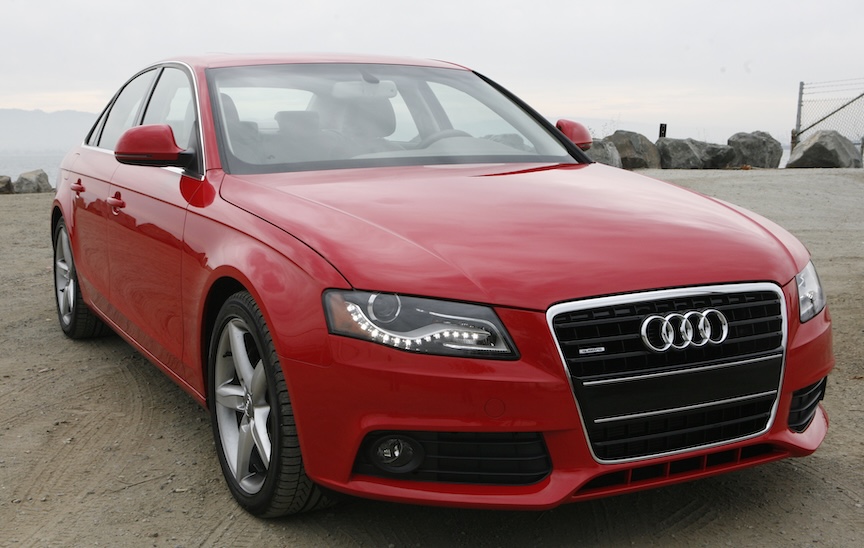
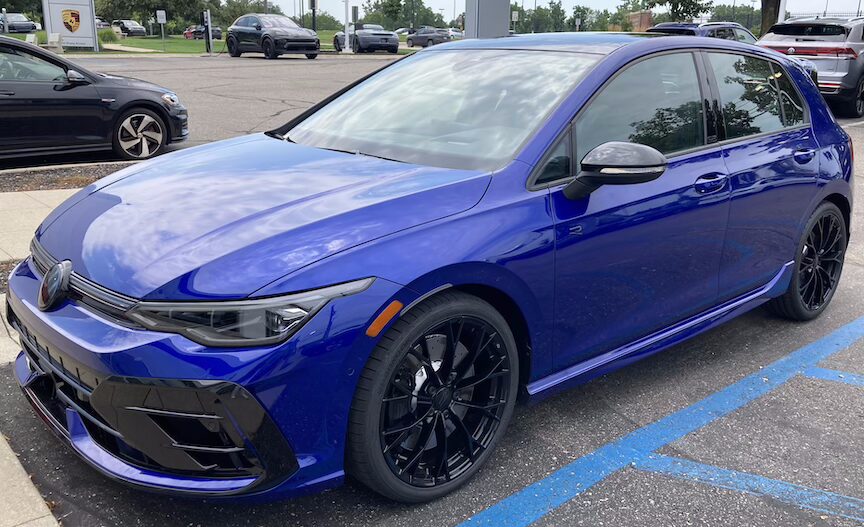
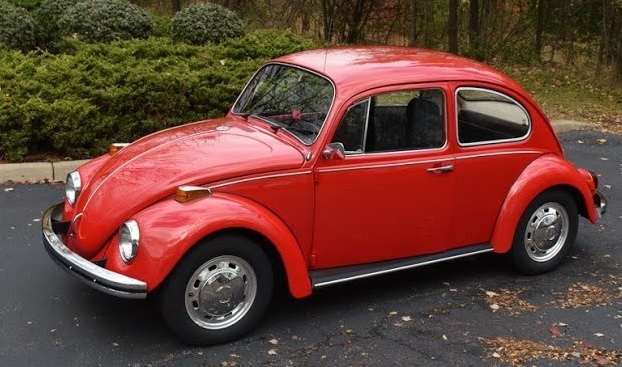
In my own car history, I have owned a lot of red cars. My first car was a red Beetle; other vehicles have included a maroon Fiat convertible, burgundy Sirocco, bright red Rabbit, and a brilliant red Audi. In this regard I go against stereotype, as I am anything but outgoing and ready for adventure. It is likely I chose red vehicles to project the persona of who I would like to be, rather than the shy and reticent individual that I am. Of my most recent cars, two out of three – both Golf Rs – have been Lapis Blue. Blue has always been my favorite color. I suspect I choose blue not only because it matches my eyes, but because it projects the confidence and authority I lack. Perhaps by choosing colors that are so against type, some of the qualities associated with them will rub off on me.

I have owned a couple of silver cars, and the only positive thing I can say about them is that they were less likely to show dirt. Although they were attractive in their own right, such color conformity was never something I wanted to embrace. Although I am what you would call an older woman, I am not yet ready to succumb to the neutral, unimaginative, and dare I say boring, black, white, and silver cars that populate the roads today. I’ll continue to enjoy surprising folks when they see me, a small, silver-haired woman, behind the wheel of a rumbling Lapis Blue-Black Edition, hot hatch Golf R.