An SAH Car Story.

We all have a car story. As the newly elected president of the Society of Automotive Historians, I was asked to share mine. Here’s what I wrote: 

Over the past 50+ years, newly elected SAH presidents have used the opportunity of the SAH Journal ‘President’s Perspective’ to introduce themselves to the SAH membership. As I looked over past Journal issues in preparation for this task, I was, frankly, very much overwhelmed by the wealth of automotive knowledge and experience shared by past presidents over the years. I am honored and somewhat intimidated to follow such a respected and accomplished group of automotive historians.
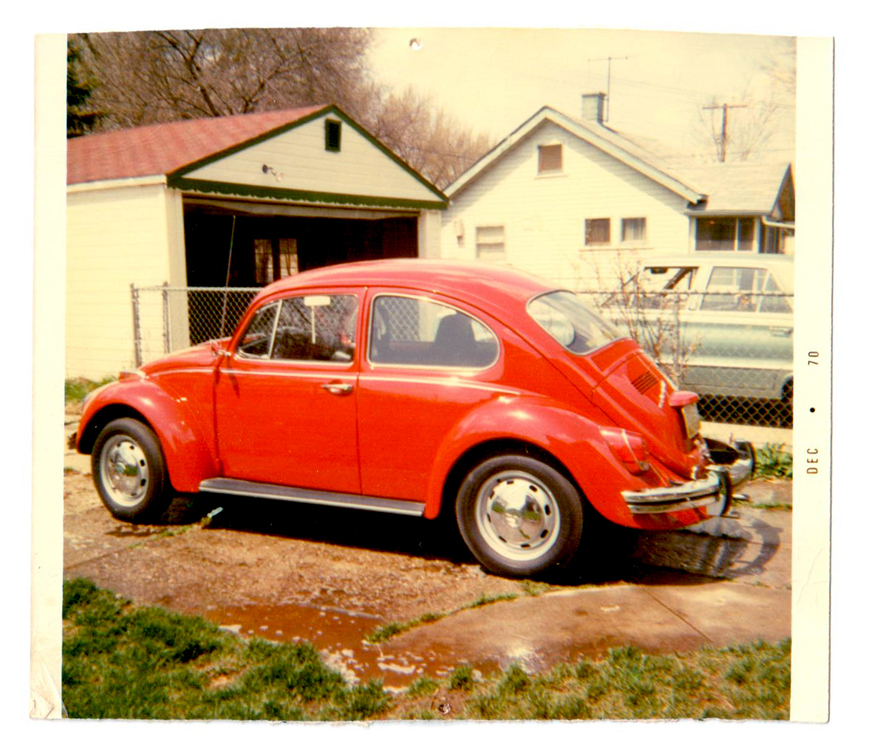
My freshly washed 1970 VW Beetle. At $2293 out the door, its only options were a radio and crank sunroof.

As for my own automotive history, I was born in Detroit. My maternal grandfather was one of thousands of Polish immigrants who came to this country in the early twentieth century for employment in the auto factories; he spent the most of his life working on the line at the Dodge Main Plant in Hamtramck. My mother, as was the practice of immigrant families at the time, never learned to drive. Consequently, when my father died unexpectedly when I was nine, we were without a car until my brother turned 16 four years later. We went through a series of sibling-shared automobiles; I learned to drive on a used 1960 Corvair [three-on-the-floor] followed by a 1964 Tempest [three-on-the-tree]. My instructors were my oldest brother, a Detroit police officer, who patiently accompanied me as I ground gears driving around a local high school parking lot, and my brother-in-law, who let me practice shifting on his Falcon family station wagon. On my twenty-first birthday I purchased my first car, a brand new 1970 Volkswagen Beetle, the vehicle of choice for financially strapped Wayne State University commuters like me. That red Bug began a lifelong love affair with German automobiles, which have included two Beetles, two Audis, a Scirocco, a Rabbit, a GTI, and two Golf Rs. 
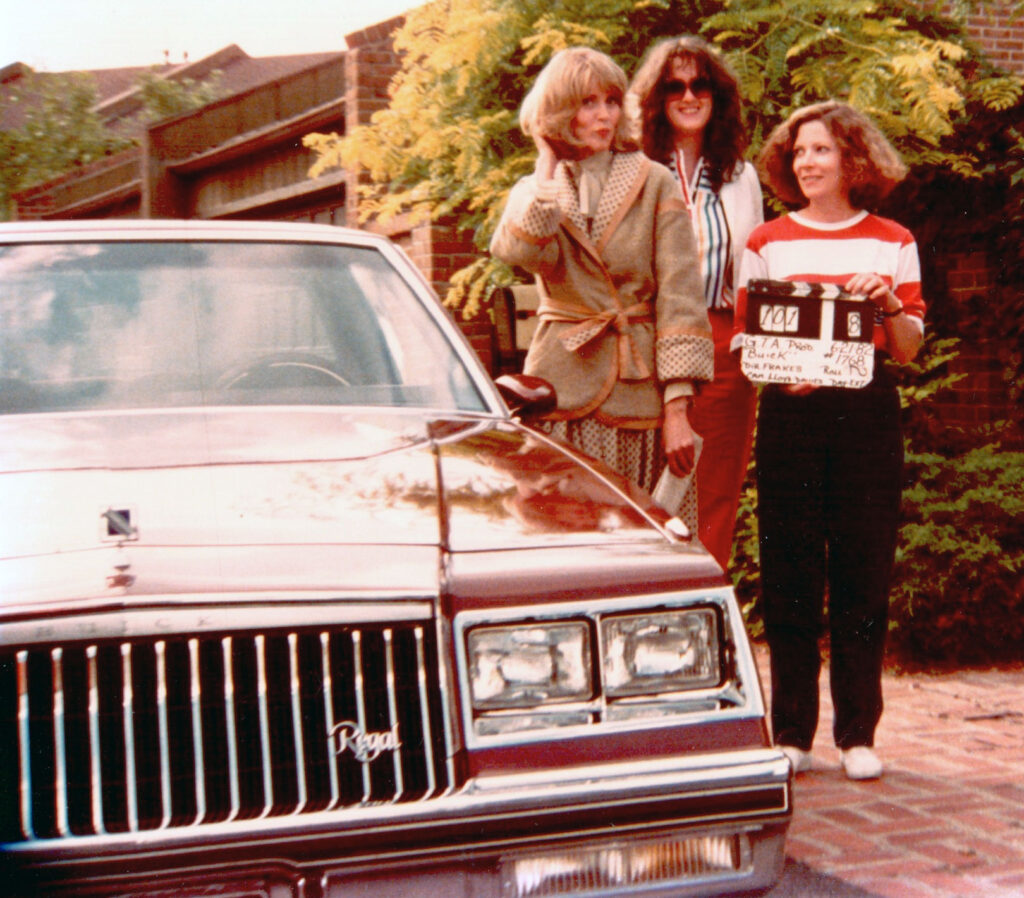
A much younger me pictured on the right, shooting a commercial for the Buick Regal in 1982.

Thus, unlike my predecessors, I came to the SAH by a rather unconventional route. I did not grow up with an interest in cars; I do not have an encyclopedic knowledge of automobiles; I do not have a background in the history of anything, much less automotive history. My interest in the automobile, in fact, came simply by chance. When I entered graduate school after a career in advertising, while enrolled in a class titled ‘Gender, Technology, and Pop Culture,’ I discovered that the subject of women and cars had not received much attention in scholarship. As I was looking for my academic ‘niche,’ I decided that my Motor City upbringing, coupled with my experience writing car commercials, could serve as the foundation for this new direction. I started writing and publishing journal articles and attending academic conferences to receive feedback on my work. It was at one of these conferences, put on by the Popular Culture Association, that I met Carla Lesh, who suggested I join the Society of Automotive Historians. The rest, as they say, is [automotive] history.

My PhD dissertation committee, after my successful defense of “Have You Heard the One About the Woman Driver: Chicks, Muscle, Pickups, and the Reimagining of the Woman Behind the Wheel”

As I met more people in the SAH, at conferences and through my local Leland Chapter, I decided I wanted to become more involved in the organization. Once again, Carla served as an impetus, convincing me to run for the board. Although it took me two tries to succeed, once elected I quickly took on whatever was asked of me. Painfully shy, I preferred to work behind the scenes, chairing the Awards Committee, Brick and Mortar Working Group, and serving on the Brigham Awards Panel. After conducting research at the IMRRC and presenting at Watkins Glen, I also became involved in Argetsinger Symposium planning. When asked to run for Vice President, I initially refused, believing I did not have the temperament nor automotive provenance to serve. However, after persistence from a few longtime members [you know who you are], I decided to give it a shot, which eventually led to my election as SAH president. So here I am.

Now that I am in office, I am fortunate to have fellow officers and a board of directors eager to take on the formidable task of moving the SAH forward – perhaps kicking and screaming – into the twenty-first century. As a team we endeavor to make the SAH more accessible, to provide timely communications, and to encourage member participation. In addition, our hope is to expand the SAH’s reach, to welcome those – much like me – outside the traditional confines of ‘automotive historian.’
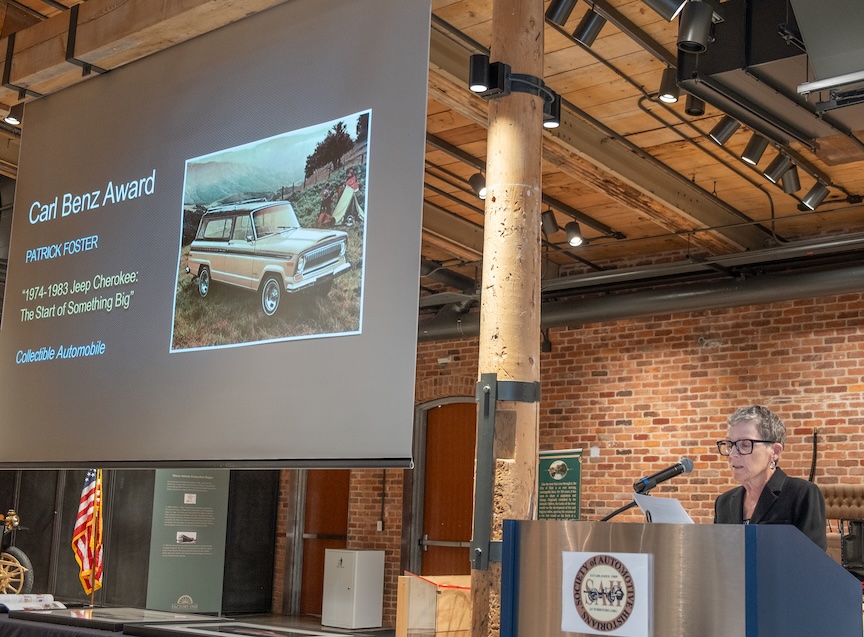
In my role as Awards Chair, presenting at the SAH annual banquet

Since taking office in October, a monthly newsletter has been instituted, and an Executive Committee has been formed to address pressing SAH issues. Future objectives for the organization include restructuring the publications committee to accommodate new media as well as to develop a timely and attainable publication schedule, establishing a finance committee to oversee the organization’s financial health, planning, and accountability, and to begin the transition of SAH publications to digital. In addition to the Awards Banquet and Hershey in the fall, there are also plans in the works to co-sponsor a seminar in conjunction with the Studebaker National Museum 2026 Concours d’Elegance at Copshaholm weekend this summer.

As I begin my term, I want to express my appreciation to the membership for entrusting me with the leadership of this organization. And lest I forget, thank you especially to Carla Lesh, as well as all the others who have supported and encouraged me to become a part of the Society of Automotive Historians.
What is a ‘Hot Girl Car’?

A recent Jalopnik article asked its readers, “What’s the Most Hot Girl Car?” I couldn’t help but wonder what, exactly, was the answer this query was looking for. Was Jalopnik trying to determine what car, when driven by a woman, qualifies her as ‘hot?’ Or was it, in fact, requesting its readers to name the hottest car among female drivers? 

Jalopnik writer Amber DaSilva’s hot girl car

Historically, the auto industry has featured advertising which features a ‘hot’ women posed next to a vehicle as a means to lure the male consumer. The implication is that driving such a car will attract the type of sexy woman a man couldn’t win over on his own. The measure of a car’s hotness can also be determined by the nature of the woman who drives it. For example, a 2007 Cadillac GTS commercial featuring Kate Walsh famously asked, ‘when you turn your car on, does it return the favor?’ The question equated the thrill of driving a Cadillac to that of a sexual encounter with a beautiful woman. In each of these representations, women’s assumed preference for a particular automobile marked the woman, and the car with which she was associated, as ‘hot’.

Asking the readers to name the hottest car among female drivers, on the other hand, was a question that could be answered by looking at marketing studies that ranked car purchases by gender. It didn’t seem like the kind of request a magazine that caters to a young and often skeptical demographic that prefers an irreverent, humorous, and often critical take on the automotive industry would, in fact, make.

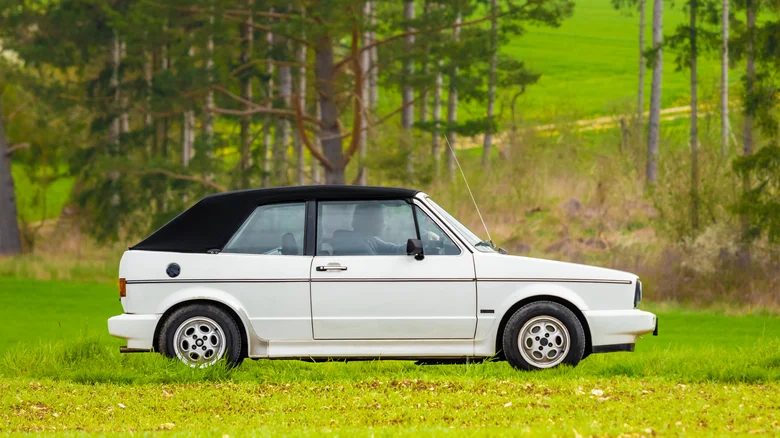
1990s Golf Cabriolet

As neither of these answers seemed to suffice, I relied on ChatGPT, the preferred research instrument of the auto site’s target audience: young adults, the majority male, under 30 years of age. When I posed the question, ‘what is a hot girl car?’ to the popular AI tool, the answer wasn’t at all what I was expecting. 

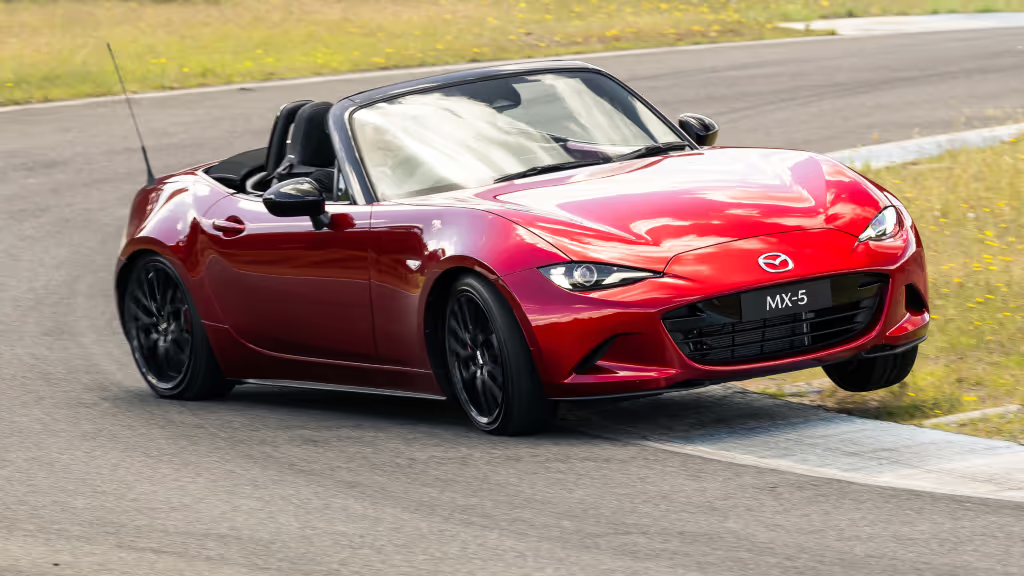
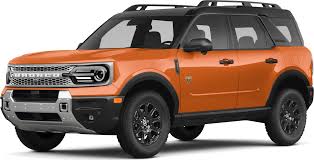
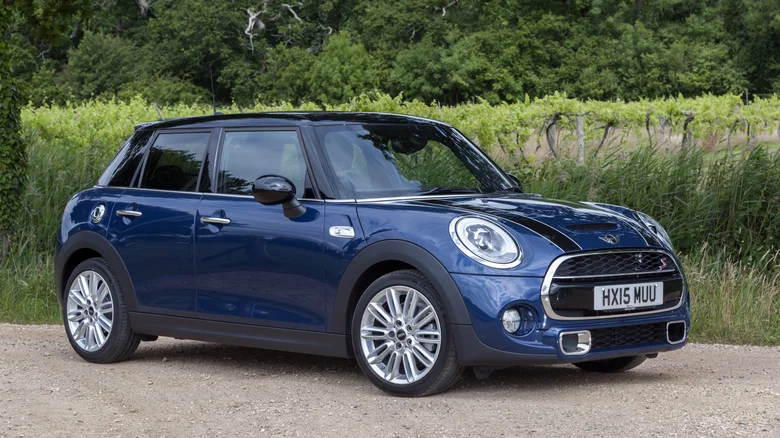
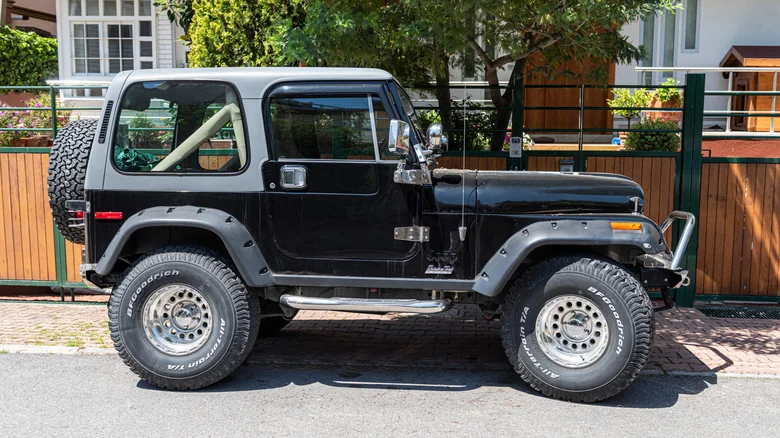
According to the collected sources, a hot girl car is an informal, often humorous, slang term to describe a vehicle that exudes a fun, stylish, or confident vibe, frequently associated with trendy, independent, or unapologetically stylish young women. The term is not presented in a derogatory manner; rather, it lists the traits of the hot girl car as stylish or cute, compact or sporty, well-kept or accessorized, and associated with urban, fashion-forward, or lifestyle branding. A hot girl car exudes confidence, elan, or a ‘let’s go on an adventure’ attitude. The vehicles most often associated with this label are the Mazda Miata, Mini Cooper, Fiat 500, VW Beetle, or for the adventurous types, the Jeep Wrangler and Ford Bronco Sport. 

The ultimate chick/hot girl car – Mazda Miata

What struck me about this answer was its similarity to the definition of the ‘chick car,’ a term that became popular during the early 2000s. In an article published in 2012, I described the chick car as a type of vehicle favored by women that was small, quick, stylish, and fun to drive. Unlike the hot girl car, however, the chick car was considered inferior by the male contingent for its association with the woman driver. As I wrote, ‘Women’s attraction to a particular automobile causes members of the male population to question the car’s technology. […] The assumption that women lack technical expertise creates a reverse kind of logic in the minds of many male consumers. They believe that since women cannot appreciate the finer technical characteristics of a car, such as power, handling, and performance, the cars women purchase must be technologically deficient. Women’s approval, in the minds of many men, leads to the devaluation of the car.’[1] The male constituency of auto makers, journalists of that time often disparaged the chick car, referring to it as “the kind of car no manly man would be caught dead driving.”[2]

Ford Bronco Sport, for the adventurous hot girl

However, based on the Jalopnik article responses, that sentiment has evolved. The author of the article, Amber DaSilva, invited her readers to ‘think up your definition of a hot girl, and pair that girl with the car that fits her best. What’s the most hot girl car you can buy?’ Many of the vehicles I defined as chick cars – Beetles, Minis,  Miatas, and Golf Cabriolets – were included as bona fide hot girl cars. Jeeps, classic muscle cars, and anything-with-a-stick-shit also made the list. And although the majority of responders were male, they were not regarding the car choices, or the women who made them, in a pejorative way. Rather, they were admiring the women for their automotive preferences; i.e. the choice in itself awarded some hotness. Granted, the readership of Jalopnik skews more left than the majority of car magazines, but I found it encouraging to see that most of posters – while having a little fun – did not disrespect young female drivers. And as the writer defined herself as a hot girl herself, the question – and the responses – were all made it a lighthearted, convivial manner. 

Mini Cooper

As I noted over a decade ago, despite the attempts of male journalists and drivers to disparage the chick car, women embraced the category and made it their own. As I asserted, ‘to the women who drive them, the chick car represents personal freedom, independence, agency, and a whole lot of fun.’[3]It is heartening to know that young people today – men and women alike – embrace the chick/hot girl car a means to adventure, identity, and empowerment.


[1] Chris Lezotte. “The Evolution of the ‘Chick Car’: Which Came First, the Chick or the Car?” The Journal of Popular Culture, Vol. 45 No 3 2012, 525.

[2] Quote from John McElroy, host of Autoline Detroit.

[3] Lezotte, Chick Car, 529.