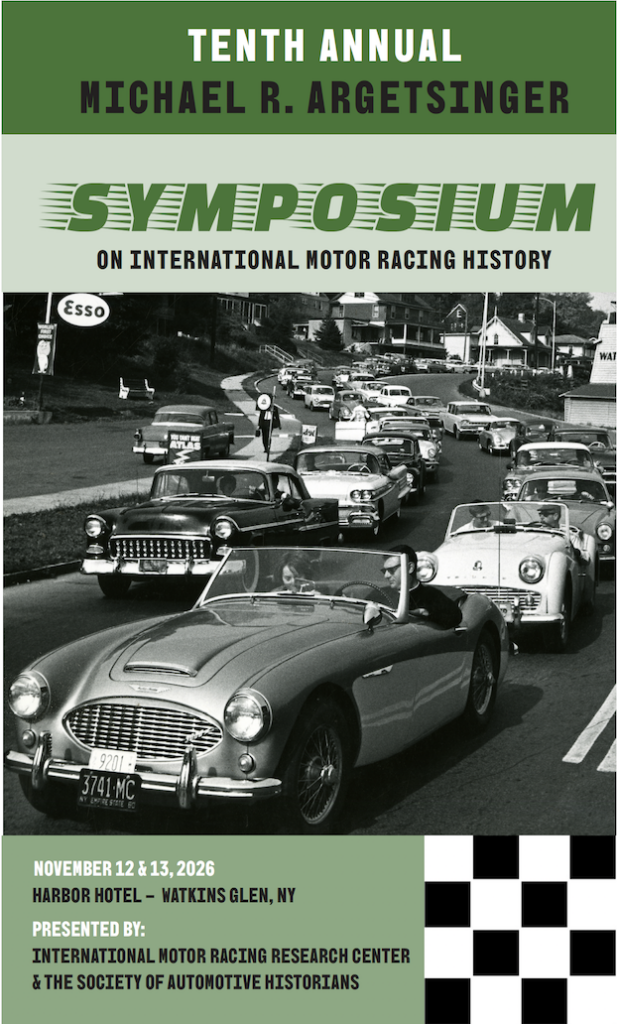
This is the time of year when I typically write about my annual trip to Watkins Glen, New York, for the Michael R. Argetsinger Symposium on International Motor Racing History. The two-day event brings together scholars, historians, and racing enthusiasts from across the country and, occasionally, around the world to share research and explore motor racing history from a variety of perspectives. In past years, I have presented on the history of women-only racing as well as on women who participate in autocross.
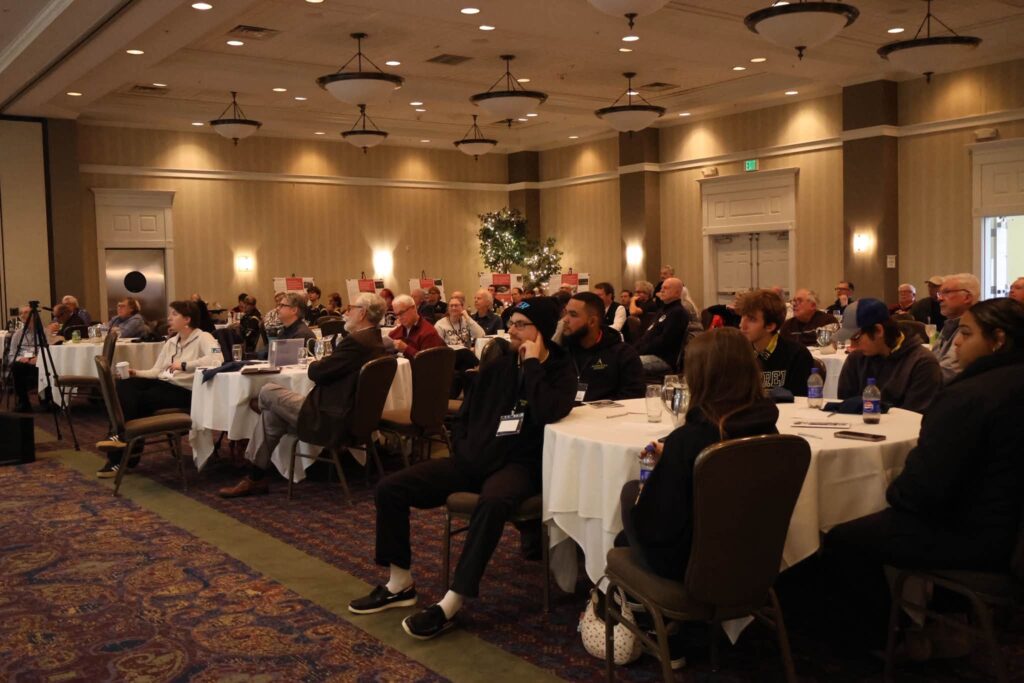
Although I did not have a presentation on the program this year, my role as Society of Automotive Historians president included working with the International Motor Racing Research Center (IMRRC) to organize the symposium, develop the program, and co-host the event. Unfortunately, a last-minute family emergency forced me to cancel my plans. I was particularly disappointed to miss several presentations that had caught my interest, especially those by the four women presenting this year—a number that I believe sets a record for the Argetsinger Symposium. While I wasn’t able to hear their presentations in person, I look forward to watching the recordings and catching up on the work of these impressive women.
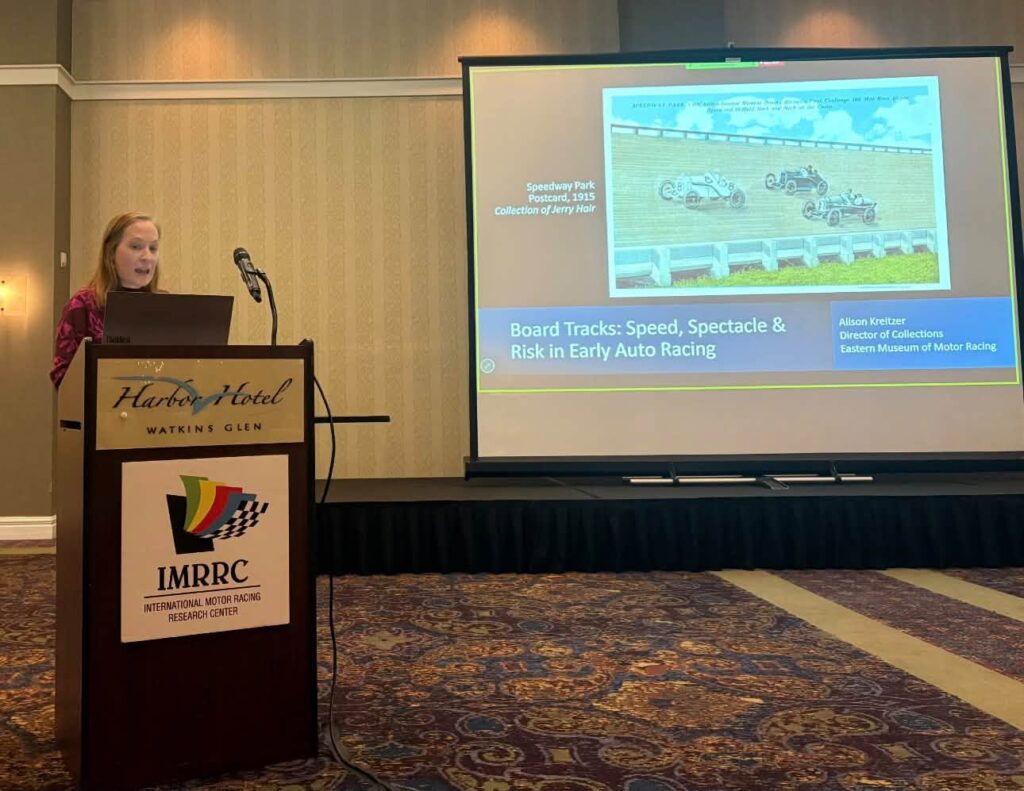
Alison Kreizer is a public historian and museum professional who serves as Director of Collections at the Eastern Museum of Motor Racing in York Springs, Pennsylvania. She oversees the stewardship, documentation, preservation, and interpretation of the museum’s extensive motorsports collections and contributes to exhibitions and educational programming. A past Argetsinger participant, her presentations often focus on local racing history. This year’s talk – “Board Tracks: Speed, Spectacle, and Risk in Early Auto Racing” – examined the rise and decline of board track racing. It explored how technological innovation, commercial entertainment, and public fascination with speed converged to create one of the most spectacular, and dangerous, periods in motorsports history, as well as how extraordinary construction and maintenance costs, changing economic conditions, and growing concerns about safety let to the event’s rapid disappearance.
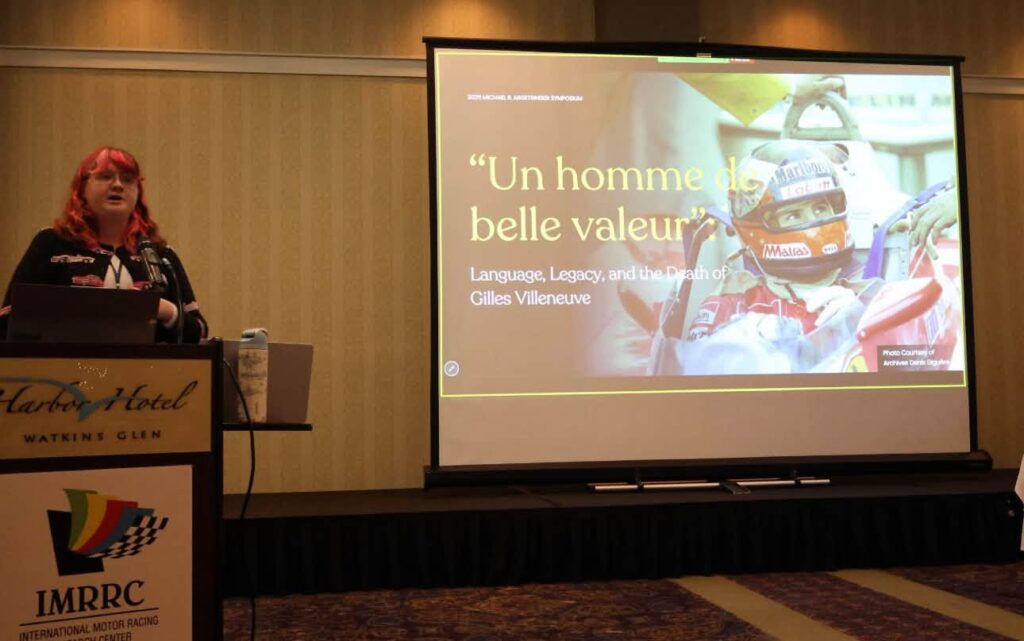
Clio Reid, a new SAH Board member, is a graduate student dually enrolled in the Department of History at Queen’s University in Kingston, Ontario and the School of Information Studies at Syracuse University. Her research interests lie in the intersections of motorsports history, sensory history, and cultural studies. Her presentation was drawn from her Master’s Thesis, in which she researches Gilles Villeneuve and Quebec’s relationship to Formula One during the 1980s. Through a close reading of newspapers including La Presse, Le Devoir, The Montreal Gazette, The Toronto Star, and both English and French coverage on the Canadian Broadcasting Corporation, Clio analyzes media reactions to Gilles Villeneuve’s death in both Francophone and Anglophone Canadian culture.
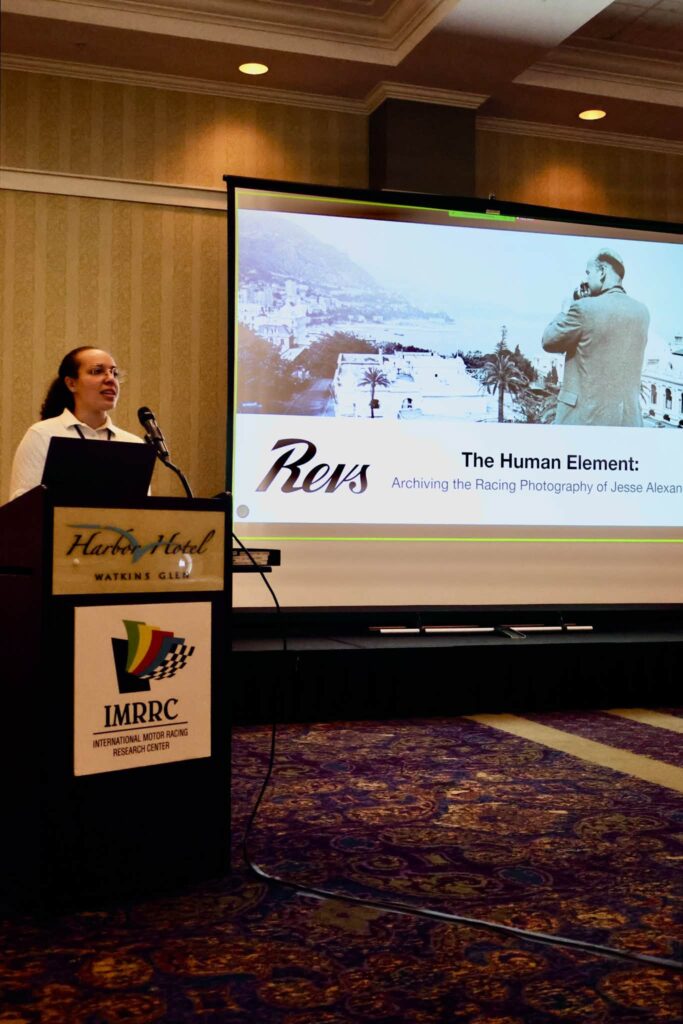
Rachel Abrahams serves as the Access and Outreach Archivist at the Archives and Research Center at Revs Institute, located in Fort Myers, Florida. She plays a key role in supporting the meaningful car community by making newly processed collections discoverable, engaging potential donors, and fulfilling internal and external research requests. Her goal is to make historical automotive materials searchable and available to everyone, especially younger enthusiasts. In her role as archivist, Rachel’s presentation focused on the Jesse Alexander Photograph Collection housed in the Revs new Archives and Research Center. This collection is considered one of the most important portfolios of racing photography. In a discussion of the man behind the photographs, Rachel reintroduced the public to Jesse Alexander and his photography and also shed light on the work that goes into preserving historical photograph collections.
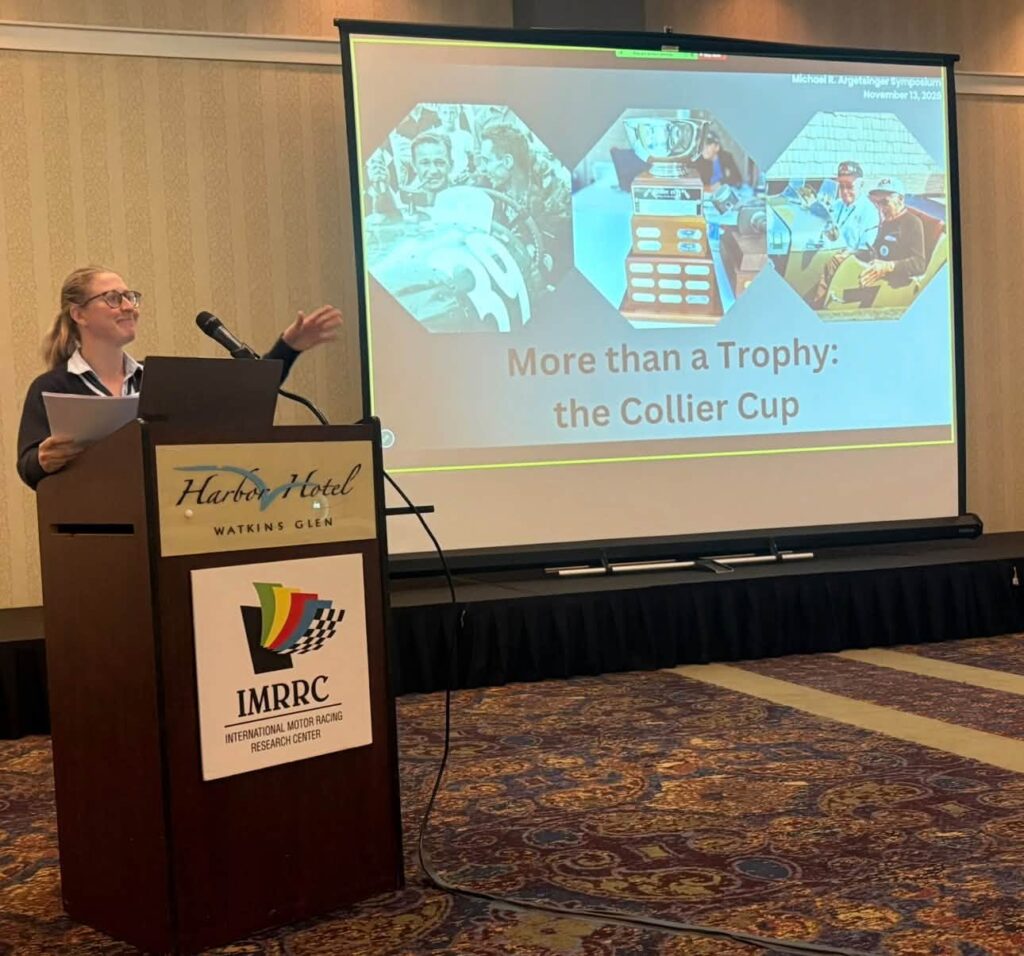
The symposium’s final presenter was Alana Roberts, a volunteer at the IMRRC and a racing enthusiast with a passion for classic British cars. Although she considers herself an amateur historian, Alana has proven to be an exceptional chronicler of local racing history. This year’s presentation focused on the Collier Cup at Watkins Glen, recognized as a living memorial to Sam and Miles Collier and a yearly celebration of MG and weekend warrior racing culture. Through photographs, archival materials, participant stories, and event history, the presentation explored the origins and evolution of the Collier Cup, and examined how an MG-only feature race became a cherished tradition within the vintage racing community.
I was truly sorry to miss this year’s symposium. I applaud the work of these four women, who are not only shaping our understanding of motor racing history but also making history themselves as influential contributors to a field long dominated by men.
Photos courtesy of the IMRRC