
As those who peruse my blogs may be aware, I am a regular reader of Jalopnik, an online publication and news website dedicated to automobiles, car culture, the automotive industry, and broader transportation topics. While there are thousands of automotive news and culture websites globally, I am particularly attracted to Jalopnik because it is young [although I am not], often irreverent, and unlike most car sites, fairly left leaning. Consequently, it provides content that appeals to a broad demographic, which includes the female car enthusiast. It also offers a lot of ideas and insights that provide fodder for this blog.
One of the common formats promoted by Jalopnik is audience participation; i.e. asking its readers to opine on or contributed to a particular topic. Earlier this month, the editors asked Jalopnik subscribers to suggest “youth-focused car programs our readers would create if they didn’t have to worry about money.” The responses included off-the-wall ideas such as ‘forklift-racing,’ but also those that were modern day updates of programs from the past. What was notable about of these ‘revival’ programs mentioned is that all were activities in which girls had historically been prohibited from participating. Therefore, I thought it would be interesting to do a gendered history on these activities to see if and when they became open to young girls with an interest in cars.
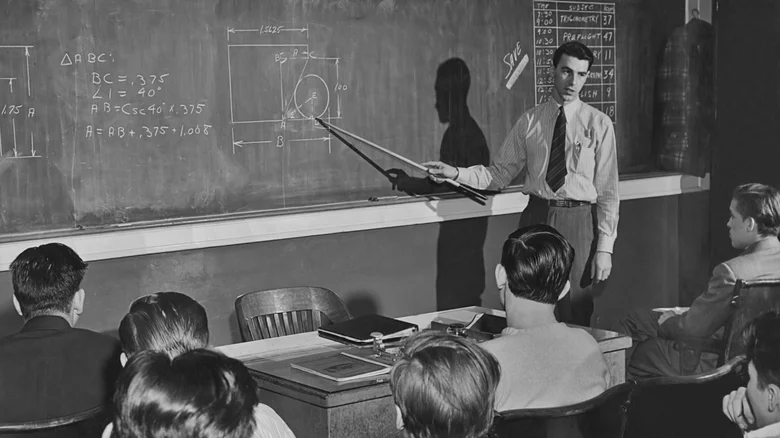
The first on the list was ‘shop classes.’ Also known as industrial arts, traditional shop classes teach practical, hands-on trade skills alongside applied problem-solving. Subjects include but are not limited to woodworking and carpentry, metal working and welding, drafting and design, and auto repair and mechanics. Problem solving skills include the ability to troubleshoot structural flaws, adapt to material limitations, and make immediate, calculated decisions. Skills learned in these classes can lead students to trade and technical careers, preparing for potential apprenticeships or industrial work. More modern technical education programs often connect directly to employment in STEM fields.
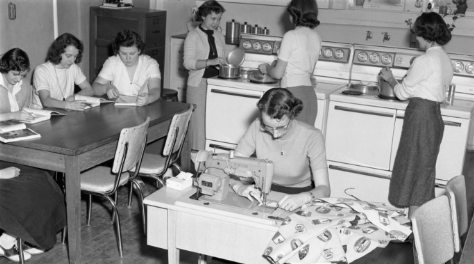
Before the 1970s, shop classes were traditionally restricted to boys, while girls were steered into home economics, reflecting the gender prescriptions of the time [this was certainly my experience]. While rare individual exceptions existed depending on the school district, official segregation or strong cultural discouragement kept girls out of the industrial arts. In 1972, the passage of Title IX outlawed sex discrimination in any education program or activity receiving federal financial assistance. From 1975 to 1978, the Department of Health, Education, and Welfare issued final Title IX regulations, giving public high schools until July 1978 to fully integrate curricula, combine shop and home economics classes, and open all electives to all students.
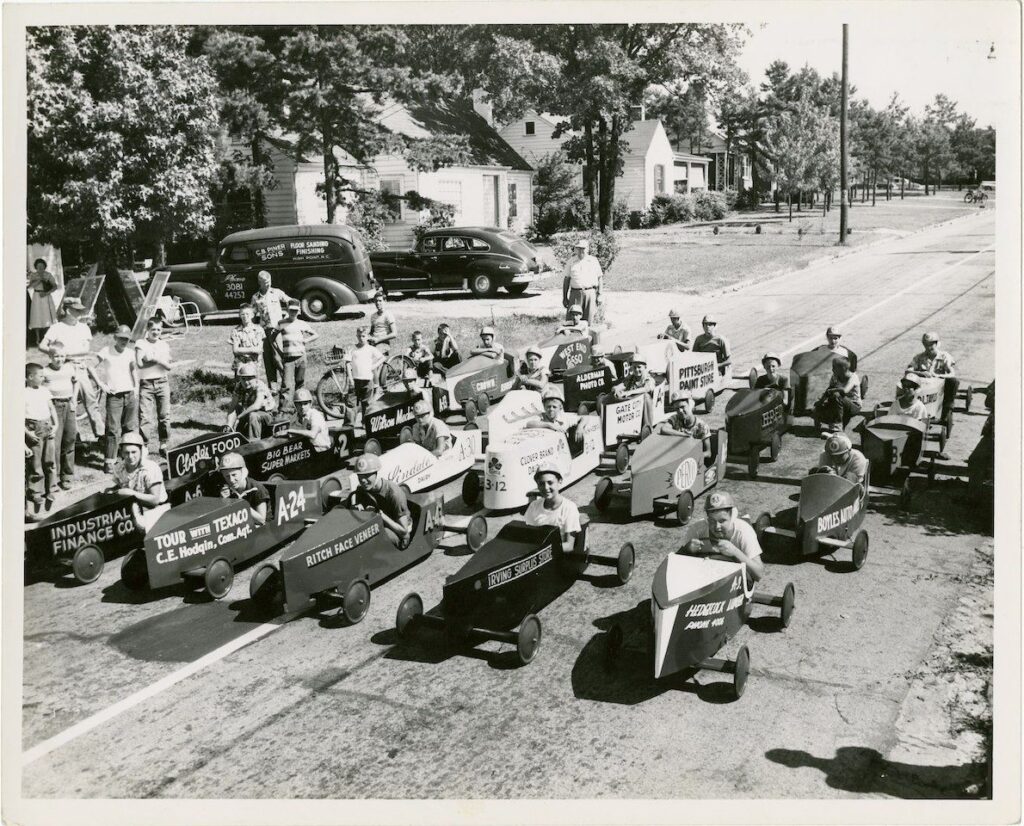
Another program recommended by Jalopnik readers was the Soap Box Derby. For those unfamiliar, the soap box derby is a youth racing program featuring unpowered, gravity-fed cars built from scrap wood, boxes, or official kits. It was started by newspaper photographer Myron Scott in 1934, who was inspired by children racing homemade cars down the street in his native Dayton, Ohio. For decades, the derby was officially restricted to boys. Although written rules never explicitly banned girls from participating, promotional materials, local Chevrolet dealerships [Chevy was a major sponsor], and founder Scott treated it as an exclusive boys-only competition. It was only after pressure – particularly from mothers in Fayetteville, North Carolina who fought against local rules and Chevrolet – that the organization changed its rules in 1971 to allow girls to compete. The following year, 27 of the 251 champions qualifying for the derby were girls and, for the first time ever, a girl placed in the top nine. In 1975, Karen Stead became the first girl to win the American Soap Box Derby championship in what was once an all-boys sport.
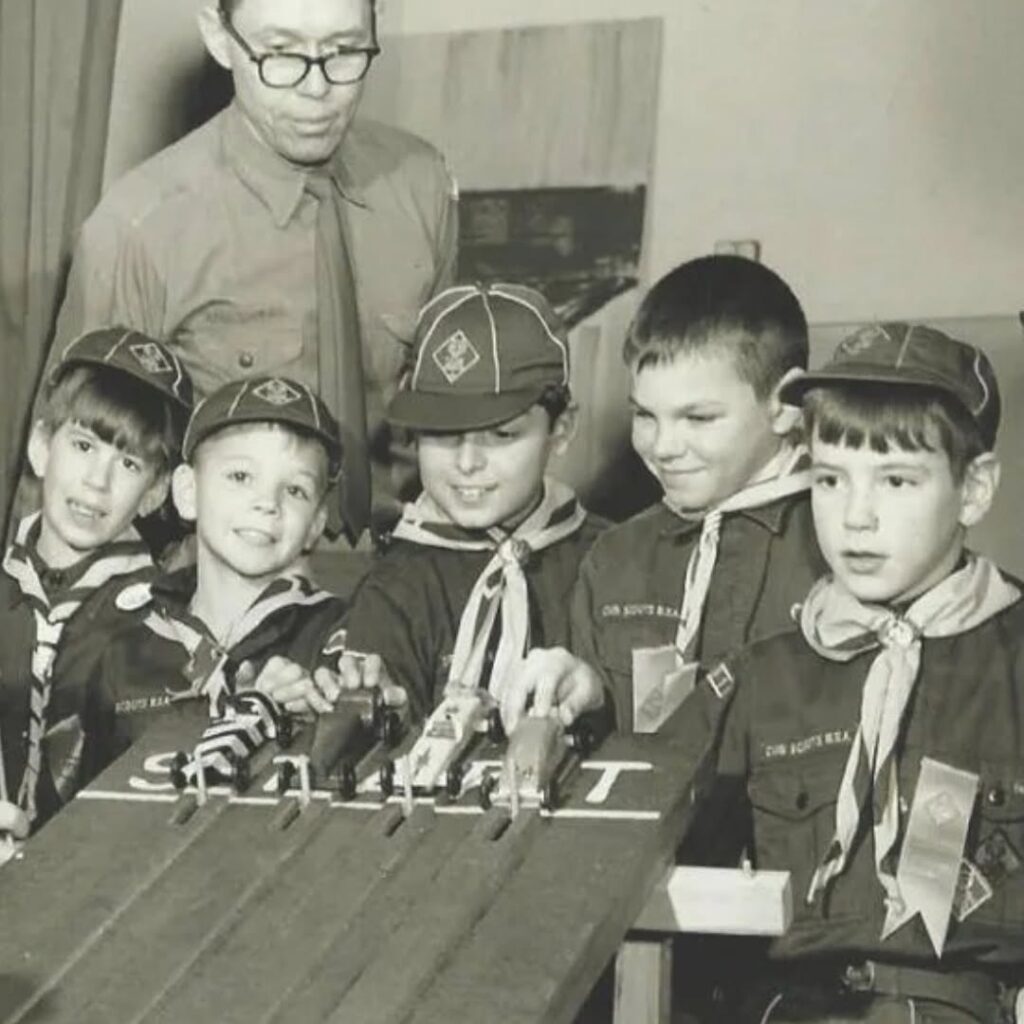
The Pinewood Derby is a gravity-powered, miniature wooden car racing event hosted primarily by Scouting America [formerly the Boy Scouts of America]. The Pinewood Derby was created by Don Murphy in 1952, a Cubmaster in Manhattan Beach, California. Murphy wanted his young son, who was too young to compete in full-sized Soap Box Derby races, to experience building and racing a car. In 1955, the derby became a nationwide program of the BSA. To compete in the derby, each participant started with a Scout Shop kit containing a block of wood, four plastic wheels, and four metal axels. With guidance and help from adult mentors or parents, Cub Scouts carved, sanded, and painted cars with a 5-ounce weight limit. As an official program of the Boy Scouts of America, girls were not allowed to participate, forcing organizations such as the Girl Scouts to host their own Pinewood Derby events. Girls were not eligible to compete in the Pinewood Derby until 2018, when the BSA began admitting girls into the Cub Scout program.
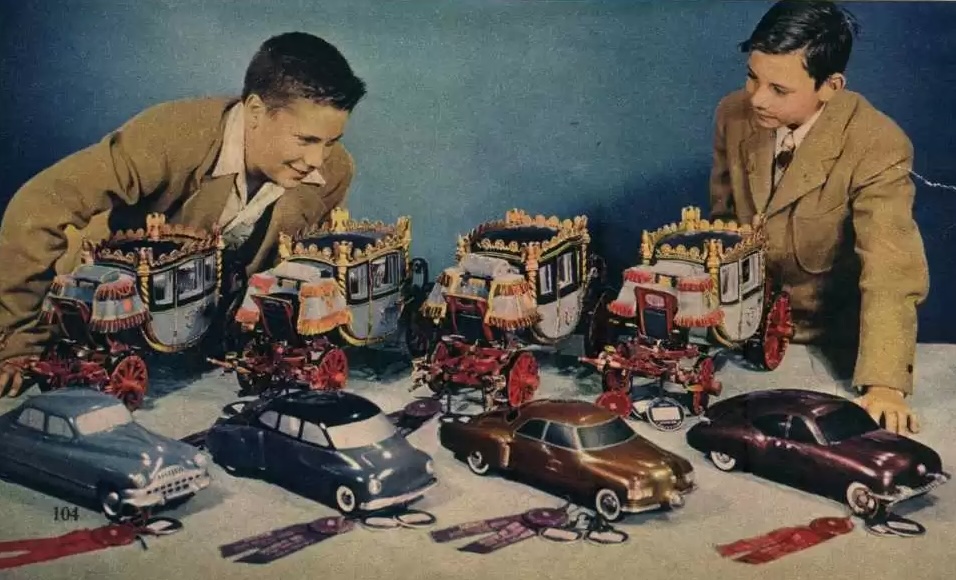
Perhaps the most prominent youth automotive activity of the twentieth century was the Fisher Body Craftsman’s Guild, an extracurricular industrial arts competition and talent pipeline run by the Fisher Body Division of General Motors from 1930 to 1968. Created as a philanthropic and public relations project, it was established to identity, train, and recruit young artistic talent, as formal automotive design degree programs were almost non-existent at the time. Over its 38-year run, the guild enrolled more than 8.7 million youths across the US and Canada, awarding millions in college scholarships. In its early years, teenage boys were challenged to handcraft 1/18 scale or ½ scale wooden models of the Napoleonic Coach, the iconic corporate logo of Fisher Body. Beginning in 1937, GM design chief Harley Earl expanded the contest to include one-of-a-kind 1/12 scale concept or ‘dream’ cars. The coach-building category was phased out by 1948, leaving futuristic car design as the program’s sole focus. Many top national winners were offered direct employment in the General Motors styling and design studios, launching careers for prominent young automotive designers and industry leaders.
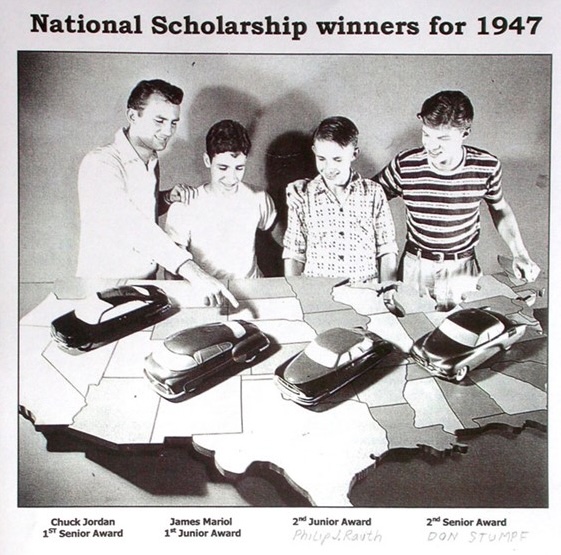
Girls were never allowed into the Fisher Body Craftsman’s Guild program; only boys were encouraged to enter. Although the 1968 discontinuation of the program is often attributed to a “mix of shifting educational and cultural factors,” as noted by Hemmings writer Daniel Strohl, Richard Earl, Harley Earl’s grandson, “claimed the contest was discontinued specifically to prevent women and non-whites from competing.” Ruth Oldeziel, in the 1997 paper “Boys and Their Toys”, noted that the exclusion of girls from the Fisher Body program “reveals an intricate web of institutions that defined and maintained a male technical domain.” With the women’s movement and Title IX on the horizon, it can be argued that the guild anticipated the upcoming change in societal and gender mores and opted to close its doors rather than revamp its program to allow female participation.
Unlike the GM guild competition, the Ford Industrial Arts Awards Program – which began in 1949 – permitted any student in grades 7 through 12 from a vocational, trade, or public school to enter. While he majority of competitors were boys, girls routinely submitted projects and won national prizes in divisions like Printing, Mechanical Drawing, and Plastics.
While Title IX is most often referred to in conversations regarding equal opportunity and financial compensation within women’s sports, as the above auto-related examples suggest, its effect had a much broader and powerful reach. It is interesting to note that in the suggestions for youth auto-related programs from Jalopnik readers, not one mentioned gender as a qualifier. So yes, when it comes to kids and cars, perhaps we’ve come a long [but not long enough] way, baby.
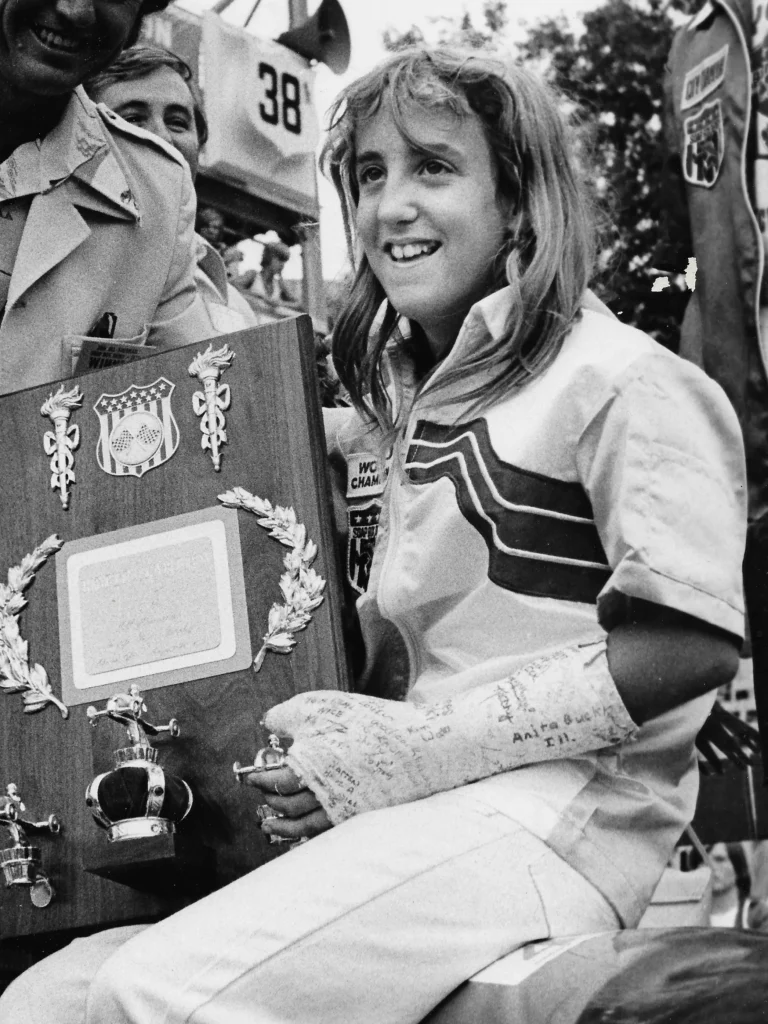
Soap Box Derby Winner
