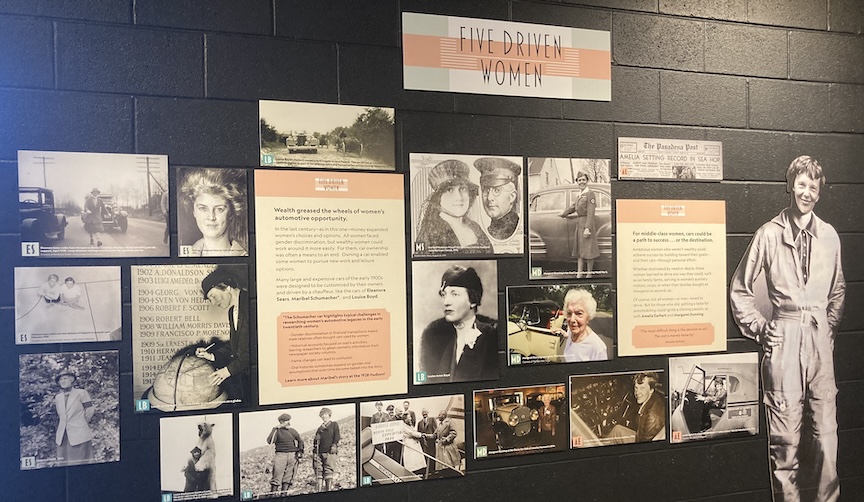
While at the Studebaker National Museum for an automotive history conference earlier this month, I had a chance to take a peek at a new special exhibit. Although the space of Five Driven Women is dominated by five magnificent automobiles, the stories of the women who owned and operated them are what, in fact, drives this groundbreaking exhibit. The five featured women originate from a variety of circumstances and called upon the automobile for a myriad of reasons. However, despite differences in wealth, status, opportunity, and fame, each understood the importance of automobility to personal goals, practice, and identity.
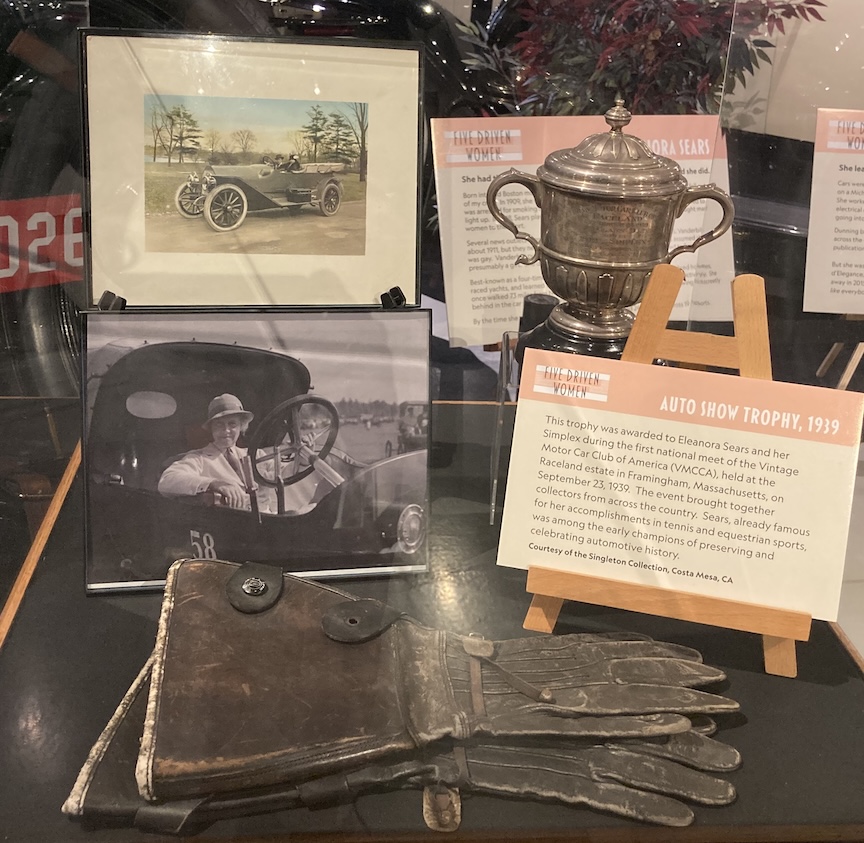
Eleanora Sears, represented by a 1912 Simplex Torpedo, was well known for her accomplishments in tennis and equestrian sports. She and her Simplex, gifted to her by none other than Harold S. Vanderbilt, participated in the first national meet of the Vintage Motor Car Club of America, which brought together collectors from all over the country. Louise Arner Boyd – the first woman to lead an expedition to an Arctic archipelago – selected the 1934 Packard Twelve 1108 Custom Convertible Sedan due to its suitability for photography fieldwork. For three months, chauffeur Percy Cameron piloted Boyd and the Packard through Poland and neighboring countries; the resulting photographs – which included Hitler propaganda posters – were incorporated into Boyd’s landmark 1937 publication, Polish Countrysides.
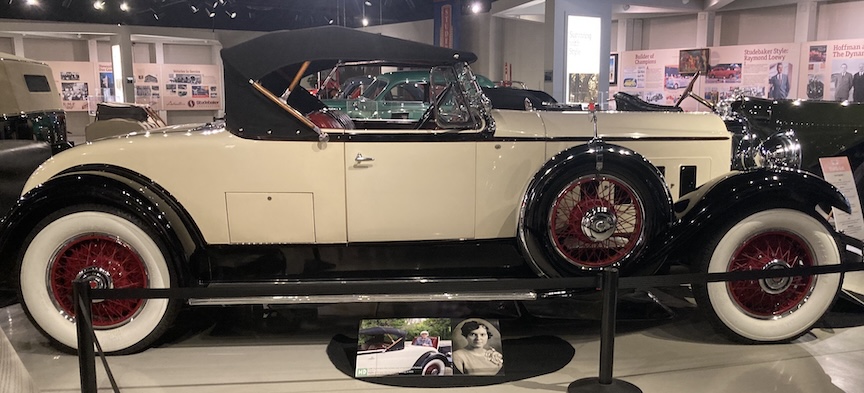
Aviator Amelia Earhart was well known for her love of cars; auto manufacturers often capitalized on Earhart’s fame to promote their automobiles. However, the 1937 Cord 812 Convertible Phaeton on display at the Studebaker was purchased by Earhart for her own use, no doubt due to its streamlined design and advanced engineering. Classic car enthusiast Margaret Dunning learned to drive at 10 years of age; she maintained her love of cars and driving throughout 103 years of living. Dunning purchased the 1930 Packard 740 Roadster in 1959; she was not only its owner but also performed the routine maintenance herself. Dunning was a great champion of automotive history; the Sloan Museum of Discovery in Flint, Michigan recognizes her many contributions.
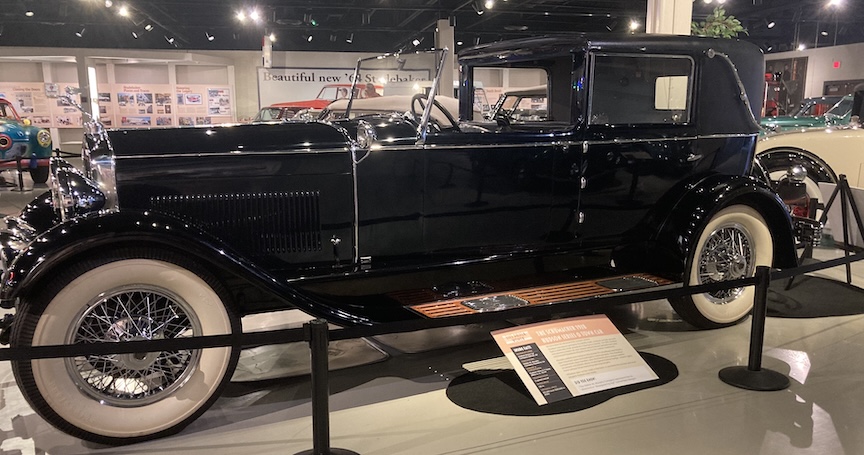
The 1928 Murphy-bodied Hudson on display, attributed to socialite Maribel Schumacher, represents many of the difficulties recovering women’s automotive history. Marriage, divorce, name changes, and the inability of women to purchase automobiles on their own often muddled the archival waters. In Schumacher’s case, verified ownership is further complicated by a daughter who inherited her mother’s first and last name; such inconsistencies in the archival record lead to the question of who, in fact, owned the 1928 Hudson.
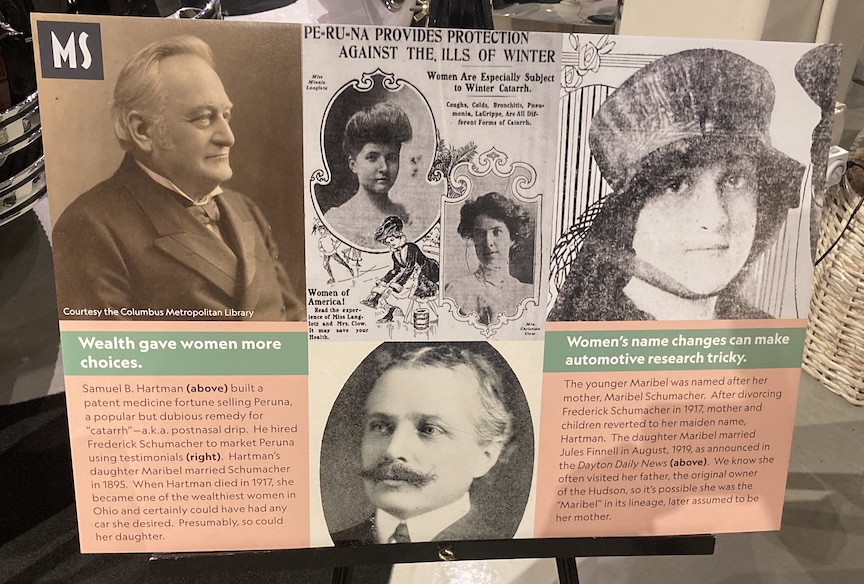
The Studebaker National Museum exhibit not only presents the cars and those who drove them but also provides insight into the challenges researching women’s automotive legacies in the early twentieth century. It also touches on how wealth, or lack of it, complicated women’s choices and options in automobile purchase and use. Accompanied by artifacts, news articles, and rarely viewed photographs, Five Driven Women communicates how, despite differences in background and opportunity, early female drivers sought automobility for the opportunity and independence it promised.